


What Causes Drooling with a Foul Odor?
Jun 09, 2022
Source: Cainiu Health

Dr. Zhang Lei
Introduction
Drooling with a foul odor is primarily caused by gastrointestinal dysfunction and commonly occurs in individuals with syndromes such as stomach yin deficiency, excessive stomach fire, or spleen deficiency.
1. Stomach Yin Deficiency Syndrome: This may result from consuming fatty, sweet, spicy, or irritating foods, leading to stomach yin deficiency and internal heat. Consequently, patients lose voluntary control over the opening and closing of their mouth corners during sleep, resulting in leakage of bodily fluids—often emitting a foul odor.
It is highly unsettling for adults to suddenly drool during daily life. If this occurs in public, it can significantly affect one’s personal image, prompting many individuals to actively avoid such situations. So, what causes foul-smelling drool?
Causes of Foul-Smelling Drool
Foul-smelling drool primarily stems from gastrointestinal dysfunction and is commonly observed in individuals with syndromes such as stomach yin deficiency, excessive stomach fire, or spleen deficiency.
- Stomach Yin Deficiency: This may result from excessive consumption of fatty, sweet, spicy, or stimulating foods, leading to internal heat due to stomach yin deficiency. As a consequence, the patient loses normal control over lip closure during sleep, causing bodily fluids to leak out—these fluids emit a strong, unpleasant odor.
- Excessive Stomach Fire: This syndrome arises from intense stomach heat, manifesting as a constellation of related disorders and symptoms. Nocturnal drooling may also be foul-smelling; in addition to this symptom during sleep, affected individuals often experience chronic halitosis (bad breath) and gingival swelling in daily life.
- Spleen Deficiency: Due to impaired transportation and transformation functions of the spleen, essential nutrients derived from food and fluids fail to distribute effectively throughout the body. This leads to halitosis and, if prolonged or complicated by kidney disease, results in combined spleen-kidney deficiency—further exacerbating halitosis and causing nocturnal drooling.
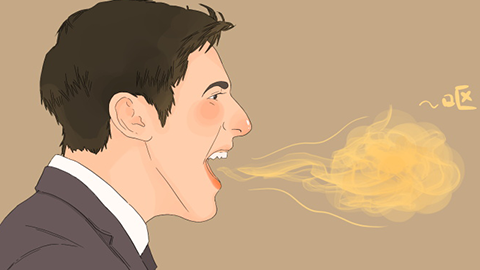
The occurrence of these symptoms is often closely linked to one’s dietary habits and lifestyle. Uncontrolled eating—such as binge-eating, excessive alcohol or meat consumption—or chronic sleep deprivation, along with heavy intake of strong tea or coffee, can aggravate the condition. With timely dietary and lifestyle adjustments, mild cases may improve spontaneously; severe cases typically respond well to pharmacological intervention over time.
Foul-smelling drool significantly impacts daily life and may cause unnecessary distress. We urge greater awareness of this issue—and hope this explanation proves helpful to you.










