


How is myopia combined with astigmatism treated?

Astigmatism and myopia are common types of refractive errors. Mild astigmatism and myopia have minimal impact on vision; however, without proper correction and management, the condition may progressively worsen—developing into moderate or high astigmatism and myopia—which can not only impair visual acuity but also significantly affect daily life and work performance. So, how is myopia with astigmatism treated?
How Is Myopia with Astigmatism Treated?
Both myopia and astigmatism can be corrected using eyeglasses, contact lenses, or refractive surgery. For mild to moderate cases, conservative treatment with prescription eyeglasses is often recommended. Individuals with myopia typically experience blurred distance vision, while astigmatism commonly causes eye strain and blurred or distorted vision. If myopia and astigmatism substantially compromise visual function, appropriately prescribed spectacles or contact lenses can effectively restore clear vision. In more severe cases, laser refractive surgeries—including excimer laser (PRK), femtosecond-assisted LASIK (semi-femtosecond), and small-incision lenticule extraction (SMILE, or full-femtosecond) —may be considered.

Myopic astigmatism usually results from a combination of genetic and environmental factors. Myopia arises when the eyeball’s anterior-posterior axis elongates congenitally or due to excessive refractive power of the eye, causing light rays to focus in front of the retina rather than directly on it. Astigmatism, by contrast, is typically a congenital abnormality involving an irregularly shaped cornea (or, less commonly, lens). Therefore, depending on severity, early intervention—especially with corrective lenses—is crucial to prevent amblyopia (lazy eye) development.
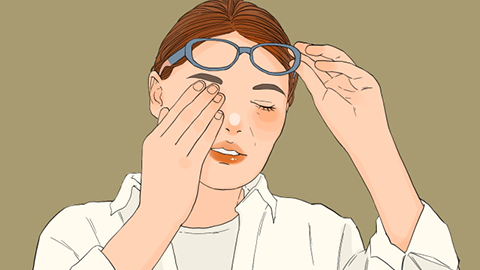
In daily life, ensure adequate sleep and avoid prolonged wear of corrective lenses. We hope this information proves helpful to you.


