


Why Do Children Develop Myopia?

Today, people’s living standards have improved significantly, and a wide variety of electronic devices continue to emerge. Many children become excessively absorbed in using these devices. As a result, children’s vision has been steadily declining—some even develop myopia at a very young age and must wear glasses daily. In fact, parents are deeply concerned upon observing this trend. So, what causes myopia in children?
Causes of Myopia in Children
Myopia in children arises from multiple factors, including environmental and genetic influences. It commonly develops due to prolonged near-vision tasks, which cause the ciliary muscle to lose elasticity and prevent the lens from returning to its normal shape. High myopia exhibits a certain degree of hereditary tendency. Additionally, factors such as excessively close viewing distance, extended periods of reading, writing, homework, or television watching; overly bright or dim lighting; reading while lying down; and nutritional deficiencies—including insufficient intake of calcium, zinc, and vitamins—can all contribute to myopia development. It is recommended that children undergo cycloplegic refraction at a hospital. In many cases, mild myopia can be improved by adjusting visual habits and dietary patterns. If necessary, appropriately prescribed eyeglasses should be worn promptly to prevent amblyopia or strabismus.

Myopia in children can be corrected using either intraocular lens correction or orthokeratology (ortho-k) contact lenses. Currently, intraocular lens correction is a widely adopted method for treating true myopia in children. If a child’s myopia is mild, immediate spectacle correction may not be required. However, for moderate or severe myopia—especially when distant objects appear consistently blurry—prompt correction is essential. We recommend visiting a professional optometry center for comprehensive refraction testing and fitting with the most appropriate corrective lenses. Orthokeratology is another common treatment for pediatric myopia: it involves wearing specially designed rigid gas-permeable contact lenses overnight, which temporarily reshape the cornea’s surface curvature to reduce its refractive power and thereby correct myopia.
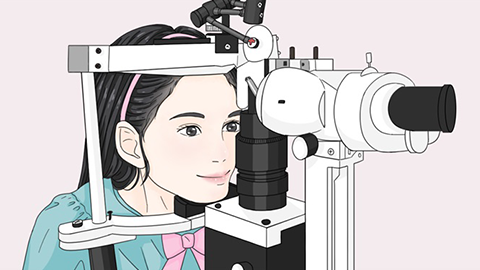
We recommend that children develop the habit of performing eye exercises regularly. Nutritionally, they should consume adequate vitamins and minerals, and always maintain proper ocular hygiene. We hope this information proves helpful.


