


How is congenital astigmatism in children treated?

For everyone, maintaining healthy vision is extremely important, and we must pay greater attention to eye protection in daily life. However, due to children’s limited self-regulation abilities, they often overuse their eyes. Without active parental supervision, this may adversely affect ocular health, impair vision, and even lead to astigmatism. So, how is congenital astigmatism treated in children?
How Is Congenital Astigmatism Treated in Children?
There is no effective conservative treatment available to reduce congenital astigmatism in children. However, it is crucial to note that congenital astigmatism—especially high-degree astigmatism—may lead to amblyopia (lazy eye). Therefore, prompt referral to a hospital for comprehensive ophthalmic evaluation is essential. If amblyopia is diagnosed, corrective spectacles must be prescribed following cycloplegic refraction to treat the amblyopia and improve visual acuity. Surgical correction for astigmatism may be considered after adulthood; generally, astigmatism up to approximately 500 degrees is amenable to surgical intervention. Hence, prior to reaching adulthood, strict attention to routine eye hygiene is vital, and acquired astigmatism should be minimized—primarily by reducing prolonged eye closure or near-work activities.
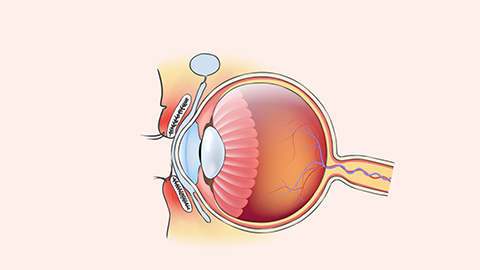
Childhood astigmatism can be classified as either congenital or acquired. It primarily arises from variations in refractive power across different meridians of the eyeball. When astigmatism results from congenital refractive error, it is considered physiological astigmatism. During early childhood—before age six—if physiological astigmatism does not interfere with visual development (i.e., astigmatism ≤1.00 D), no intervention is typically required, and observation alone is appropriate. Routine follow-up at an ophthalmology clinic every three to six months is recommended. However, if astigmatism exceeds 1.00 D, it may hinder visual development, resulting in relatively poorer visual function compared with peers; in such cases, optical correction should be considered. Currently, the two main correction options are spectacle lenses and orthokeratology (corneal reshaping) contact lenses, selected and fitted based on the child’s individual tolerance and suitability.
It is recommended that astigmatism in children be corrected promptly to prevent progression of the refractive error. We hope this information proves helpful to you.


