


What should I do if my eyes appear sunken due to myopia?

For some individuals with high myopia, wearing glasses is essentially required throughout the day. Once they remove their glasses, they often feel uncomfortable and unnatural, perceiving their eyes as sunken—particularly unattractive. Consequently, many myopic patients dare not take off their glasses even while sleeping. So, what can be done if the eyes appear sunken due to myopia?
What to do when eyes appear sunken due to myopia
Myopia primarily develops as a result of prolonged eye strain after extended visual tasks or genetic predisposition, leading to elongation of the eyeball’s axial length and causing images to focus in front of the retina. Following the onset of myopia, the most common symptom is decreased visual acuity. In patients with long-standing or high myopia, structural changes such as apparent proptosis (bulging) or enophthalmos (sunken appearance) of the eyeballs may occur. Once myopia has developed, it is difficult to reverse. While corrective measures—including eyeglasses and laser refractive surgery—can improve corrected visual acuity, myopia itself cannot be fully cured. Therefore, ocular shape changes induced by myopia are generally irreversible.
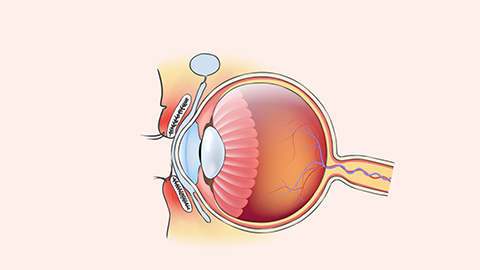
In myopia, the appearance of sunken eye sockets typically results from progressive axial elongation of the eyeball, which causes relative proptosis. Unfortunately, there is no effective method to reverse this change; in most cases, restoration is not possible. This is because the vast majority of myopia is axial in nature: for every 1 mm increase in axial length, refractive error increases by approximately 300 diopters. Consequently, proptosis is commonly observed in myopic eyes—especially pronounced in patients with high or extreme myopia—and the resulting forward displacement of the globe creates the visual impression of sunken eye sockets.
We recommend cultivating healthy ocular habits and wearing appropriately prescribed corrective lenses to help control further progression of refractive error. We hope this information proves helpful to you.


