


How to Determine Whether You Have Astigmatism
Jun 29, 2022
Source: Cainiu Health

Dr. Chen You
Introduction
To determine whether you have astigmatism, visit an ophthalmologist for a medical refraction examination. This examination can identify the presence of astigmatism, quantify its degree (magnitude), and determine its axis (orientation). Once these parameters are established, the refractive status can be assessed to confirm whether astigmatism is present. If astigmatism is diagnosed, corrective eyeglasses may be prescribed; alternatively, adult patients may consider refractive surgery to correct the astigmatism.
Astigmatism refers to a refractive error in which parallel light rays entering the eye from beyond 5 meters fail to converge at a single focal point on the retina after passing through the eye’s optical system; instead, they form a focal line. Astigmatism is classified into regular and irregular types. Regular astigmatism can be corrected with eyeglasses, whereas irregular astigmatism cannot be adequately corrected with standard spectacles. So, how can one determine whether they have astigmatism?
How to Detect Astigmatism
Astigmatism can be diagnosed through a comprehensive ophthalmic examination, including medical refraction testing. Refraction testing reveals whether astigmatism is present, its degree (magnitude), and its axis (orientation). Once these parameters are identified, clinicians can determine whether the eye’s refractive state corresponds to astigmatism. If astigmatism is confirmed, appropriate corrective lenses may be prescribed. Alternatively, adult patients may consider refractive surgery to correct the condition. Notably, individuals with astigmatism often experience visual fatigue—such as eye soreness, swelling, discomfort, or even tearing—after reading for approximately 30 minutes. These symptoms are classic signs of visual fatigue.
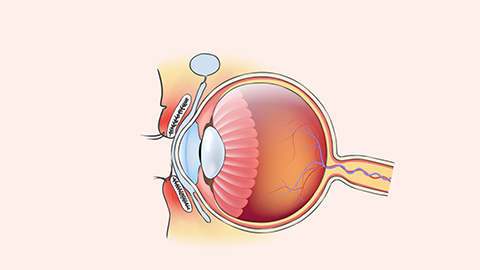
Astigmatism is a refractive condition characterized by differing refractive powers along different meridians of the eye, resulting in two focal lines and a smallest circle of confusion (also known as the “circle of least confusion”). It may originate from abnormalities in either the cornea or the crystalline lens. Clinically, astigmatism is predominantly congenital and therefore not preventable. When astigmatism is suspected, cycloplegic refraction (refraction performed after pupil dilation) is recommended. Following cycloplegic refraction, spectacle correction—typically with frame glasses—is prescribed based on the measured degree of astigmatism.

In daily life, maintaining healthy lifestyle and dietary habits is advisable. We hope this information proves helpful to you.


