


Is an anteverted uterus more conducive to pregnancy?
Jul 05, 2022
Source: Cainiu Health

Dr. Wang Lianlian
Introduction
Pregnancy is more likely when the uterus is in an anteverted position. The position of the female uterus within the pelvic cavity is classified into three types: anteverted (forward-tilted), mid-positioned, and retroverted (backward-tilted). An anteverted uterus refers to one in which the cervix points downward toward the posterior vaginal fornix. Because this position places the uterus relatively low in the pelvis, semen tends to pool there after intercourse, facilitating cervical exposure to semen and thereby enhancing sperm passage through the cervical os to meet the egg—thus promoting conception.
A uterus in the anteverted position (tilted forward) is associated with a relatively higher chance of conception. Within the pelvic cavity, the uterus may assume one of three positional variants: anteverted (forward-tilted), mid-positioned (neither markedly forward nor backward), or retroverted (tilted backward). In an anteverted uterus, the cervix points downward toward the posterior vaginal fornix and lies at a lower anatomical level. Consequently, after intercourse, semen tends to pool more readily around the cervix, facilitating cervical exposure to semen and enhancing the likelihood that sperm will traverse the cervical os to meet the ovum—thus promoting conception.
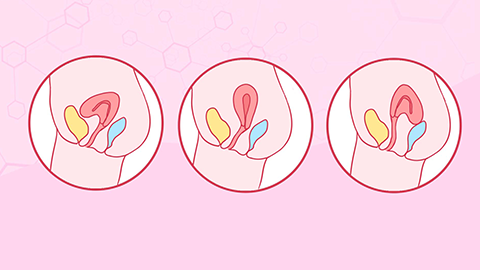
An anteverted uterine position has no adverse effect on fertility; therefore, there is no need for excessive psychological concern. If you are actively trying to conceive, it is advisable to pursue proactive preconception planning—for instance, undergoing transvaginal ultrasound monitoring of ovulation at a reputable hospital or using over-the-counter ovulation predictor kits.
However, an anteverted uterus may be associated with an increased risk of placenta previa—a condition in which the placenta partially or completely covers the internal cervical os. Placenta previa is a leading cause of antepartum hemorrhage during the third trimester and poses serious risks to both maternal and fetal health. Therefore, women with an anteverted uterus are advised to undergo routine prenatal evaluation at a medical facility to detect and manage potential complications early.
Both anteverted and retroverted uterine positions are considered normal anatomical variants. However, excessive anteversion (excessive forward tilt), anteflexion (excessive forward bending), retroflexion (excessive backward bending), or retroversion (excessive backward tilt) may impair menstrual outflow, potentially resulting in dysmenorrhea—a sign of abnormal uterine positioning.


