What Are the Symptoms of Vitiligo?
Jul 06, 2022
Source: Cainiu Health

Dr. Liu Wan
Introduction
Vitiligo is commonly accompanied by the following symptoms:
- Skin lesions: In the early stages of vitiligo, individuals may perform self-assessment based on characteristic skin lesion features. Most patients initially develop white patches on the skin surface—typically round in shape, with variable size.
- Mild pruritus: Early-stage vitiligo lesions are often asymptomatic; however, some patients may experience mild itching.
Vitiligo is a relatively common acquired pigmentary skin disorder characterized by localized or generalized complete loss of pigment in the skin and mucous membranes. So, what symptoms typically occur in vitiligo? The details are as follows:
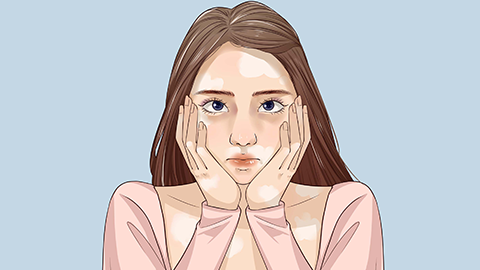
① Appearance of skin lesions
In the early stage of vitiligo, self-diagnosis can be performed based on characteristic skin lesion features. Most patients initially develop white patches on the skin surface—these may appear anywhere on the body, are typically round in shape, porcelain-white in color, and vary in size. Over time and as the disease progresses, these patches gradually enlarge and may coalesce into larger, confluent areas.
② Halo nevus–associated leukoderma
A distinctive early manifestation of vitiligo, halo nevus–associated leukoderma is characterized by the presence of a pigmented nevus on the skin surface, which progressively loses pigment, forming a small, pale halo around it. This halo gradually expands until it evolves into a larger depigmented patch. Halo nevus–associated vitiligo is a relatively rare subtype of vitiligo.
③ Mild pruritus
In the early stages, most vitiligo patients experience no subjective symptoms upon appearance of the white patches; however, some may report mild pruritus or scaling. Patients often unconsciously scratch the affected skin. Individuals lacking relevant medical knowledge may mistakenly attribute these symptoms to inflammatory skin conditions, thereby missing the optimal window for vitiligo treatment.