What Causes Newborns to Spit Up Milk?
Jul 06, 2022
Source: Cainiu Health

Dr. Xie Zixing
Introduction
Spitting up milk in newborns is a normal physiological phenomenon. Common causes include:
- Newborns have small stomach capacities, limiting the amount of milk they can hold.
- The lower esophageal sphincter (LES) in infants has relatively low muscular tone and remains relaxed, resulting in poor closure and increased susceptibility to spitting up.
- Illnesses such as colds or bacterial infections may lead to abnormal spitting up.
- Improper feeding techniques can also easily trigger spitting up.
Spitting up is a very common phenomenon in newborns and infants. In most cases, it is physiological; however, more severe spitting up may indicate gastrointestinal dysfunction or intestinal obstruction. So, what causes spitting up in newborns?
Spitting up in newborns is a normal physiological phenomenon, generally attributable to physiological factors, pathological conditions, or improper feeding practices.
① Physiological Causes
A newborn’s stomach is not vertically oriented but lies horizontally, resulting in a smaller gastric capacity and reduced food storage. Additionally, the lower esophageal sphincter (LES) muscle tone is relatively low, and the cardia remains relaxed and inadequately closed, allowing milk to easily reflux—leading to spitting up.
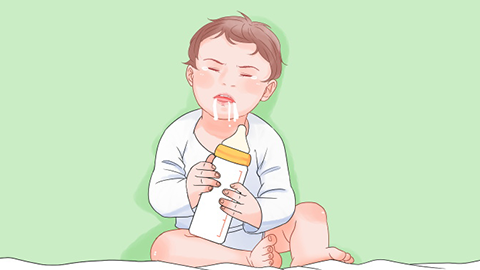
② Pathological Causes
Conditions such as colds, bacterial infections, constipation, esophageal atresia, or congenital megacolon can all cause abnormal spitting up in newborns.
③ Improper Feeding Practices
This is especially common among inexperienced new parents. For instance, some mothers prefer lying down while breastfeeding to conserve energy; however, this face-to-face side-lying position significantly increases the likelihood of spitting up. Parents may also worry that their baby isn’t eating enough and thus overfeed them—or use nipples with excessively large holes. Furthermore, newborns often move restlessly during feeding or nurse while crying, both of which can readily trigger spitting up.