


What Causes Febrile Seizures in Children?

Febrile convulsions in children are medically termed “febrile seizures.” These occur primarily because infants’ and young children’s nervous systems are still immature—for example, the cerebral cortex has relatively poor inhibitory function, and myelination of nerve fibers is incomplete. Consequently, external stimuli can easily trigger excessive neuronal excitation that spreads rapidly, leading to seizures. Febrile seizures generally fall into two categories:
1. Febrile Seizures: These predominantly affect children aged 6 months to 5 years. They typically occur at the onset of fever—either just before or shortly after fever develops—and are usually isolated events lasting from several seconds to a few minutes, rarely exceeding 5–10 minutes. Even if such seizures recur occasionally, their impact on the child’s cognitive development is generally minimal.
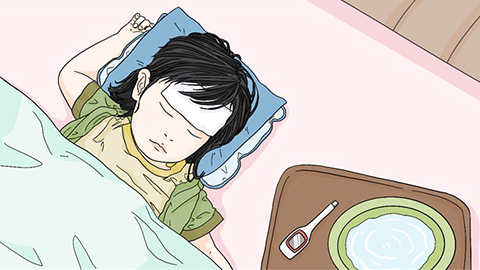
2. Encephalitis: This condition is comparatively more severe but clinically rare. Children with encephalitis may experience seizures during fever; these seizures tend to be severe and difficult to control. Additionally, affected children often display lethargy or altered mental status. Clinical examination by a physician typically reveals abnormal neurological findings.
If a febrile seizure occurs at home, immediate first-aid measures include applying firm pressure to the Renzhong (GV26) acupoint and the Hegu (LI4) acupoint, turning the child’s head to one side to prevent aspiration, and initiating physical cooling methods—such as using an ice cap, ice pack, or ice cubes applied to the head to reduce brain temperature and protect neurons. Wiping the axillae and inguinal regions with lukewarm water also aids physical cooling. If rectal antipyretic medication (e.g., acetaminophen or ibuprofen suppositories) is available at home, it may be administered rectally. After completing these initial interventions, promptly transport the child to a clinic or hospital for further evaluation and treatment.


