


How to Reduce Swelling After a Sprained Ankle
Jul 07, 2022
Source: Cainiu Health

Dr. Xu Ge
Introduction
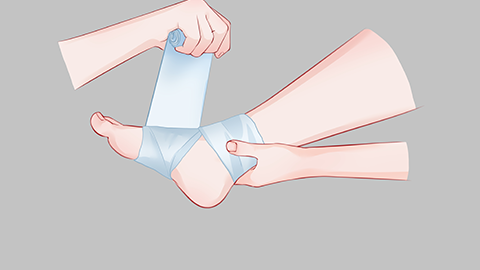
Ice application should be prioritized. Cold therapy offers two primary benefits: first, it helps reduce bleeding and alleviate swelling to some extent; second, the low temperature induces local numbness around the injured area, thereby providing analgesic effects. If available, a compression bandage can be applied in conjunction with icing—this serves both to control bleeding and to limit accumulation of interstitial fluid within tissue spaces, effectively preventing or minimizing swelling.
Cold therapy (ice application) is the first-line treatment. Cold application offers two primary benefits: first, it helps reduce bleeding and swelling to a certain extent; second, the low temperature induces local numbness around the injured area, thereby providing analgesic effects. Ice packs, crushed ice, frozen popsicles, or ice cubes may all be used—apply for 15–20 minutes per session, every 2–3 hours—or even hourly if needed—taking care to avoid frostbite. Heat application is strictly contraindicated, as it causes dilation of small blood vessels at the injury site, leading to increased bleeding and greater exudation of tissue fluid, thereby exacerbating swelling.
Not only should heat application be avoided, but topical circulation-promoting agents—including Honghua Oil (Safflower Oil), Zhenggu Shui (Orthopedic Liniment), Huoluo Oil (Circulation-Activating Oil), and Yunnan Baiyao (Yunnan Baiyao Powder)—are also not recommended. The underlying principle is identical: following soft-tissue injury, the microvascular network is disrupted, resulting in bleeding and fluid exudation. Inflammatory mediators present in the blood leak into surrounding tissues, triggering an inflammatory response and further increasing exudate production—worsening erythema, swelling, heat, and pain. Applying circulation-promoting agents at this stage would thus be akin to “pouring oil on fire.”
If available, compression bandaging can be applied to the injured area. This serves two purposes: first, it aids hemostasis; second, it limits the expansion of interstitial spaces, thereby reducing accumulation of tissue fluid—effectively preventing or minimizing swelling.


