


Symptoms of Tennis Elbow
Jul 07, 2022
Source: Cainiu Health

Dr. Xu Ge
Introduction
Tennis elbow typically develops gradually. Patients commonly experience pain during movement at the lateral (outer) aspect of the elbow joint. The pain may sometimes radiate upward or downward, accompanied by a sensation of soreness, swelling, and discomfort, leading to reluctance to move the affected arm. Activities requiring forceful gripping—such as lifting a bucket, turning a bottle cap, or knitting—exacerbate the pain. A localized tender point is usually found on the lateral aspect of the elbow; occasionally, tenderness may radiate distally toward the hand.
Lateral epicondylitis (tennis elbow) typically develops gradually. Patients commonly report pain during movement at the lateral (outer) aspect of the elbow joint. The pain may radiate upward toward the upper arm or downward into the forearm, often accompanied by a sensation of soreness, swelling, or discomfort, leading to reduced activity. Activities requiring grip strength—such as lifting a bucket, twisting a bottle cap, or knitting—exacerbate the pain. In severe cases, patients may even struggle to hold chopsticks or grasp a cup steadily. This condition was first identified in tennis players, where repetitive racquet swinging and ball striking were found to be causative.
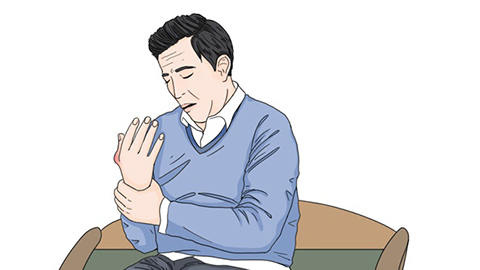
A localized tender point is usually present over the lateral aspect of the elbow. Occasionally, tenderness may radiate distally toward the hand. Specifically, the tender point is located over the lateral epicondyle of the humerus; it is focal in nature. In some cases, tenderness may extend distally along the extensor tendons, and mild tenderness or pain upon movement may also be elicited over the extensor tendons themselves.
Mild swelling may be present; in more advanced cases, bony hypertrophy may be palpable. There is typically no local erythema or swelling, and elbow flexion and extension remain unaffected. However, forearm rotation (pronation and supination) provokes pain. Pain is alleviated when the affected limb is positioned with the elbow flexed and the forearm supinated—conditions under which the extensor muscles are relaxed. In severe cases, even simple actions such as finger extension, wrist dorsiflexion, or holding chopsticks can trigger pain. Conversely, pain tends to subside when the elbow is flexed or the wrist is externally rotated. A minority of patients report increased pain during damp or rainy weather.


