


Can Zuguang Powder treat onychomycosis (gray nail)?

Onychomycosis (commonly known as “gray nail”) is a fungal infection. It not only compromises nail health but is also contagious. If left untreated or improperly managed, it may lead to additional complications. So, can Zuguang Powder treat onychomycosis?
Can Zuguang Powder Treat Onychomycosis?
The primary active ingredients in Zuguang Powder are salicylic acid and benzoic acid, which may be effective for mild cases of onychomycosis but show limited efficacy against severe infections. Salicylic acid and benzoic acid—key components of Zuguang Powder—are weakly acidic substances; their aqueous solutions possess keratolytic (i.e., exfoliating) and antimicrobial properties. Since onychomycosis is predominantly caused by dermatophytes and other fungi, Zuguang Powder may offer some therapeutic benefit for mild cases.
However, nails are naturally dense and impermeable, making it difficult for topical medications to penetrate deeply enough to reach the site of infection. In more severe cases—such as when multiple nails or the nail bed are involved—topical treatment alone cannot deliver sufficient drug concentration to the affected area and thus fails to achieve complete cure. Moreover, due to its weak acidity, Zuguang Powder may cause skin irritation or damage; therefore, self-administration for onychomycosis treatment is not recommended.
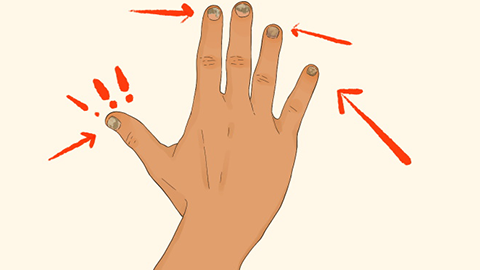
Onychomycosis is a symptom resulting from cutaneous fungal infection. It can damage the nail bed or the nail plate beneath the nail, leading to characteristic discoloration and deformity. Once diagnosed, adjunctive therapy with anti-inflammatory, antibacterial, and antiviral ointments may be applied topically. For severe fungal infections, systemic antifungal and anti-infective medications are often required—and in certain cases, surgical nail avulsion may be necessary. We hope this information proves helpful. Wishing you good health and happiness!


