What is a meniscus?
Aug 02, 2022
Source: Cainiu Health

Dr. Lin Yunfei
Introduction
The meniscus is a crescent-shaped fibrocartilage that fills the joint space between the femur and tibia. Each knee joint contains two menisci: the medial meniscus and the lateral meniscus. The peripheral portion of the meniscus is thicker and attaches to the rim of the tibial plateau, whereas the central portion is thinner. The superior surface of the femoral condyles is slightly concave, while the inferior surface of the tibial condyles is relatively flat. The meniscus lacks a direct blood supply.
In fact, the medial and lateral menisci appear on the articular surface of the tibia and are commonly referred to as “menisci.” The peripheral edges of the menisci are relatively thick and must be firmly attached to the joint capsule. In contrast, the central portion is relatively thin and remains free within the joint space. So, what exactly is a meniscus?
What Is a Meniscus?
A meniscus is a crescent-shaped fibrocartilaginous structure that fills the joint space between the femur and tibia. Each knee joint contains two menisci: the medial meniscus and the lateral meniscus. The peripheral portion is thicker and attaches to the rim of the tibial plateau, whereas the central portion is thinner. The superior surface of the femoral condyles is slightly concave, while the inferior surface of the tibial condyles is relatively flat. The meniscus lacks a direct blood supply; its nutrition is primarily derived from synovial fluid. Only the peripheral rim—where it attaches to the tibial margin—receives vascular supply from the synovial membrane. Due to this poor vascularity, meniscal tears heal poorly, often necessitating partial or complete surgical removal.
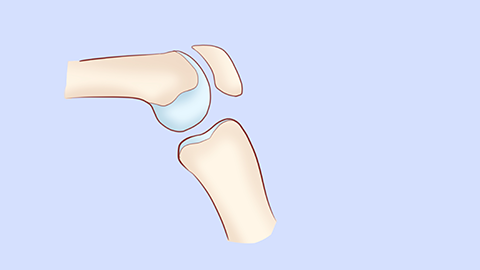
The medial meniscus is relatively larger and C-shaped, with anterior and posterior horns. Its anterior horn is narrow, while the posterior horn is broad and thick. The anterior horn attaches to the anterior portion of the intercondylar eminence—near the insertion site of the anterior cruciate ligament (ACL)—while the posterior horn attaches to the anterior portion of the intercondylar eminence, just before the insertion site of the posterior cruciate ligament (PCL). The posterior aspect of the intercondylar eminence lacks an articular surface. The outer periphery of the medial meniscus’s mid-portion connects with the deep fibers of the medial collateral ligament (MCL). Consequently, only the anterior half of the medial meniscus is slightly mobile, allowing limited movement.
The lateral meniscus is smaller and more circular (O-shaped). Its anterior horn attaches laterally to the ACL insertion site on the anterior aspect of the intercondylar eminence, while its posterior horn attaches to the posterior aspect of the intercondylar eminence—just anterior to the PCL insertion site. Its outer periphery connects to tendons rather than the lateral collateral ligament (LCL), granting the lateral meniscus greater mobility than the medial meniscus.

Patients are advised to maintain healthy lifestyle habits, follow a light and balanced diet, and avoid raw, cold, spicy, or otherwise irritating foods. We hope this information is helpful to you.