


How to expel blood stasis from the uterus
Aug 07, 2022
Source: Cainiu Health

Dr. Lv Aiming
Introduction
Uterine blood stasis commonly occurs postpartum or following induced abortion. After childbirth, retained fetal membranes and small amounts of placental tissue within the uterine cavity may lead to uterine blood stasis. When the amount of stasis is minimal, it is gradually expelled during menstruation. For more significant accumulation, traditional Chinese herbal formulas such as Shenghua Tang (Promoting Transformation Decoction) or Yimucao Granules (Leonurus heterophyllus Granules) may be used to facilitate the expulsion of stagnant blood from the uterus.
Many postpartum women discover uterine blood stasis during their recovery period. If left untreated, this retained blood stasis can seriously impair overall health. So, how can uterine blood stasis be effectively expelled?
How to Expel Uterine Blood Stasis
Uterine blood stasis commonly occurs after childbirth or induced abortion. Following delivery, residual fetal membranes and small fragments of placental tissue may remain in the uterine cavity, leading to blood stasis. When the amount of stasis is minimal, it typically resolves gradually during subsequent menstrual periods. For larger accumulations, traditional Chinese herbal formulas—such as Shenghua Tang (Promoting Transformation Decoction) or Yimucao Granules (Leonurus heterophyllus Granules)—may help facilitate expulsion of the stasis. After an induced abortion, incomplete evacuation can also cause uterine blood stasis, necessitating prompt uterine cleansing.

In general, uterine blood stasis refers to retained blood following induced or medical abortion when the uterus fails to fully expel all contents. Treatment options include Yimucao Granules or Xinshenghua Granules (New Promoting Transformation Granules), often used in combination for enhanced efficacy. In cases of substantial residue, adjunctive manual uterine massage may further improve outcomes. According to traditional Chinese medicine (TCM) theory, uterine blood stasis may result from cold congealing and blood stasis, obstructing free flow of Qi and blood. This condition may lead to menstrual irregularities and other complex gynecological disorders requiring comprehensive regulation. Commonly prescribed TCM formulas for such conditions include Xiaoyao Wan (Free and Easy Wanderer Pills), Jiawei Xiaoyao Wan (Augmented Free and Easy Wanderer Pills), and Xuefu Zhuyu Jiaonang (Blood Mansion Stasis-Resolving Capsules).
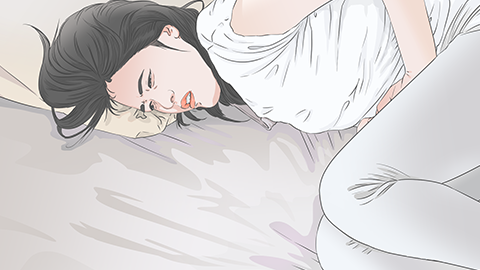
If menstrual irregularities occur, diagnostic testing for six key sex hormones can help identify the underlying hormonal imbalance, enabling targeted treatment and improving clinical outcomes. We hope this information proves helpful!


