


Which is more serious: gastric ulcer or gastric erosion?
Aug 10, 2022
Source: Cainiu Health

Dr. Zhao Haiming
Introduction
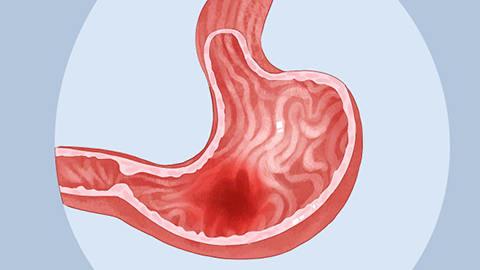
Gastric ulcers are more severe than gastric erosions. Both the stomach and esophagus consist of five layers, arranged from innermost to outermost as follows: mucosa, muscularis mucosae, submucosa, muscularis propria, and serosa. If the lesion is confined to the mucosal layer and causes mucosal injury, erosion and exudation may occur, along with mild bleeding and formation of blood crusts—this is diagnosed as gastric erosion. If gastric erosion progresses further and invades the muscularis mucosae, it develops into a gastric ulcer.
Patients with gastric disorders should pay close attention to gastric care—particularly through oral intake—as this approach can effectively treat the condition. Gastric erosion is also a common issue; patients should seek prompt and active treatment to prevent disease progression. Many individuals are unaware of the symptoms of gastric erosion. So, which is more serious: gastric ulcer or gastric erosion?
Which is more serious: gastric ulcer or gastric erosion?
Gastric ulcers are more severe than gastric erosions. The stomach and esophagus each consist of five anatomical layers, arranged from innermost to outermost as follows: mucosa, muscularis mucosae, submucosa, muscularis propria (also called the proper muscle layer), and serosa. When pathological changes are confined to the mucosal layer—causing mucosal injury—erosion and exudation may occur, often accompanied by mild bleeding and formation of blood crusts; this is diagnosed as gastric erosion. If gastric erosion progresses further—invading the muscularis mucosae, submucosa, or even the muscularis propria—or if perforation occurs, the condition is diagnosed as a gastric ulcer, representing a more advanced and severe form of gastric mucosal damage. Both gastric ulcers and gastric erosions may arise from excessive gastric acid secretion, stress, dietary irritants, foreign bodies, Helicobacter pylori infection, gastric bezoars, or nonsteroidal anti-inflammatory drugs (NSAIDs).

In general, gastric ulcers are more serious than gastric erosions. Both gastric ulcers and gastric erosions are common gastrointestinal disorders. The gastric wall comprises four layers, arranged from innermost to outermost: mucosa, submucosa, muscularis propria, and serosa. Gastric erosion involves relatively superficial lesions, typically limited to the mucosal layer and rarely extending beyond the submucosa. In contrast, gastric ulcers penetrate deeper into the gastric wall, potentially reaching the muscularis propria. If the lesion extends beyond the serosa, gastric hemorrhage may occur; severe hemorrhage can lead to gastric perforation. Therefore, gastric ulcers are clinically more severe than gastric erosions. Moreover, patients with gastric erosion generally have a very low risk of developing gastric cancer, whereas those with gastric ulcers face an increased risk of gastric malignancy—further underscoring the greater severity of gastric ulcers.
We recommend early detection and timely treatment for optimal therapeutic outcomes. We hope this information has been helpful to you.


