


What Causes Granular Growths Around the Anus?

In real life, hemorrhoids are undoubtedly a common condition—especially among individuals who sit or stand for prolonged periods, drink insufficient water, or frequently consume spicy foods. So, what causes fleshy growths around the anus?
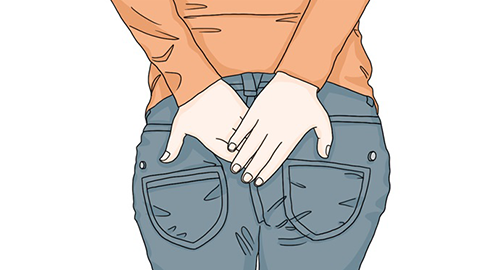
What Causes Fleshy Growths Around the Anus?
Generally, fleshy growths around the anus may be associated with conditions such as hemorrhoids, genital warts (condyloma acuminatum), or anal papillomas. Patients are advised to seek medical evaluation at a hospital as soon as possible, undergo relevant diagnostic tests, and receive targeted treatment. A detailed analysis follows:
1. Hemorrhoids
Hemorrhoids are the most common anorectal disorder, classified into internal, external, and mixed types. They result from congestion and swelling of the venous plexus in the anal canal or distal rectum, often linked to long-term alcohol consumption, prolonged sitting, or chronic constipation. In early stages, topical hemorrhoid ointments may be prescribed under medical supervision. However, surgical excision becomes necessary when the condition progresses to a more advanced stage.
2. Genital Warts (Condyloma Acuminatum)
A history of unprotected sexual activity increases the risk of contracting genital warts, which are commonly caused by human papillomavirus (HPV) infection. These warts typically appear as small, pink or white, papillomatous lesions, frequently occurring on the labia or perianal region. For mild cases, topical medications such as imiquimod cream or podophyllotoxin cream may be prescribed under medical guidance. Severe cases usually require surgical removal (e.g., curettage).

3. Anal Papilloma
Anal papillomas primarily arise from chronic inflammatory changes in the anal canal. They are often asymptomatic; however, patients may notice soft, well-demarcated, fleshy nodules at the anal verge. Observation alone may suffice in many cases. Surgical excision is considered only if clinically indicated.
Besides the above causes, anal or rectal carcinoma may also present with similar symptoms.


