


What Is the Difference Between Uterine Fibroids and Polyps?

Uterine fibroids significantly affect women’s health, and some patients may experience abnormal vaginal bleeding. Uterine polyps, however, can only be detected upon clinical examination. So, what are the differences between uterine fibroids and uterine polyps?
What Are the Differences Between Uterine Fibroids and Uterine Polyps?
The primary difference lies in their location of origin: uterine fibroids are benign tumors arising within the uterine cavity (myometrium), whereas uterine polyps are non-neoplastic overgrowths of endocervical or endometrial tissue—typically originating from the cervix or endometrium—not true tumors. Thus, their anatomical origins differ substantially.
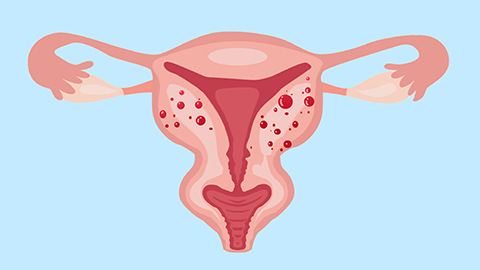
Their etiologies also differ: uterine fibroids are primarily driven by prolonged estrogen stimulation. As an estrogen-dependent tumor, fibroid growth accelerates with elevated estrogen levels and gradually regresses when estrogen levels decline. In contrast, while uterine polyp development is also associated with estrogen levels, it is not strictly estrogen-dependent.
Fibroid development is unrelated to mechanical irritation; however, uterine polyps are often associated with cervical inflammation (cervicitis) and may also be linked to mechanical irritation. Clinical manifestations differ as well: both conditions may cause increased vaginal discharge, menorrhagia (heavy menstrual bleeding), and prolonged menses. However, contact bleeding—especially during intercourse—is characteristic of uterine polyps but does not occur with uterine fibroids. Additionally, uterine fibroids may cause lower back or abdominal pain, whereas uterine polyps typically do not produce such symptoms.

Treatment approaches also differ markedly: uterine fibroids are generally managed via surgical excision (e.g., myomectomy or hysterectomy) or systemic pharmacotherapy. In contrast, uterine polyps are commonly treated with hysteroscopic polypectomy or dilation and curettage (D&C). These therapeutic strategies are fundamentally distinct. We hope this article has been helpful. Wishing you a joyful life and optimal health!


