


What should I steep in water to alleviate bad breath?

Halitosis (bad breath) is a common condition affecting many individuals and often impairs their ability to form and maintain social relationships. To effectively alleviate this condition and minimize its impact on daily life, many people seek prompt remedies for halitosis. So, what herbs or teas can be steeped in water to help combat bad breath?
What Should Be Steeped in Water to Address Halitosis?
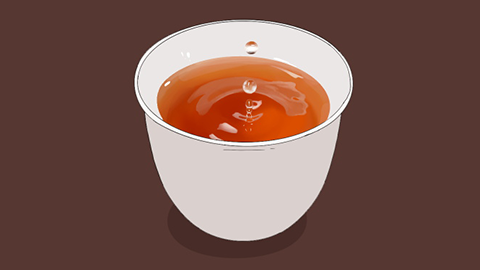
Individuals with halitosis are advised to drink infusions made from bamboo leaves, green tea, mulberry leaves, and *Scutellaria baicalensis* (Chinese skullcap). Bamboo leaf tea helps clear heat and detoxify the body, thereby reducing bad breath—particularly that caused by damp-heat or liver qi stagnation. Green tea, when brewed, yields a refreshing, fragrant infusion known for its invigorating, anti-inflammatory, and antibacterial properties. Mulberry leaf infusion may be used to treat halitosis associated with stomach-heat or wind-heat感冒 (wind-heat cold), and regular consumption of moderate amounts of alcohol (e.g., rice wine) may also aid in clearing internal heat and alleviating bad breath.
Halitosis commonly arises when food particles remain in the mouth and undergo bacterial fermentation, producing foul-smelling compounds. Oral inflammation—including common conditions such as periodontitis and gingivitis—also contributes significantly. Therefore, individuals who frequently experience halitosis often share certain lifestyle patterns: chronic sleep deprivation, prolonged late-night activity, and insufficient intake of fresh fruits and vegetables. Such habits tend to generate excessive internal heat in the gastrointestinal tract and liver, thereby exacerbating halitosis.
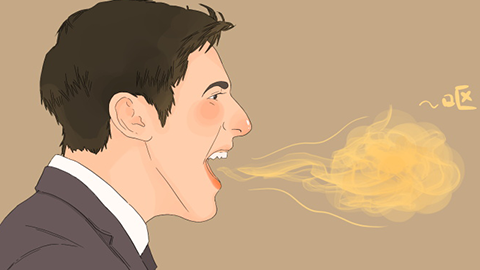
Thus, if halitosis occurs, it warrants attention. If oral health examinations reveal no abnormalities, further medical evaluation—including gastrointestinal assessment—is recommended. We hope this information proves helpful.


