


Is there a relationship between athlete’s foot and onychomycosis?
Aug 24, 2022
Source: Cainiu Health

Dr. Liu Wan
Introduction
Athlete’s foot and onychomycosis (gray nail) are related conditions, primarily caused by *Trichophyton rubrum* and *Trichophyton mentagrophytes*. Additionally, they may be associated with tinea versicolor—a fungal skin infection. These conditions are closely linked: individuals infected with superficial dermatophytes are highly susceptible to athlete’s foot; scratching the affected area with bare hands can ultimately lead to tinea pedis.
After entering the hot summer season, many people develop athlete’s foot (tinea pedis), accompanied by noticeable skin peeling and itching. Once it occurs, the skin surface is easily scratched or injured. In modern daily life, the incidence of tinea pedis (athlete’s foot) and onychomycosis (fungal nail infection, commonly known as “gray nail”) is very high. However, what are the differences between these two conditions—and is there any relationship between athlete’s foot and gray nail?
Is There a Relationship Between Athlete’s Foot and Gray Nail?
Athlete’s foot and gray nail are indeed related—both are primarily caused by dermatophytes such as *Trichophyton rubrum* and *Trichophyton mentagrophytes*. Additionally, tinea versicolor (a superficial fungal skin infection) may also be involved; it is mainly caused by the yeast *Malassezia furfur*. These conditions share a close association: individuals infected with superficial fungi are highly susceptible to developing athlete’s foot, and scratching the affected area with bare hands can subsequently lead to tinea manuum (hand fungus) or even spread the infection to the nails, resulting in onychomycosis. Although the two conditions are interrelated, they also exhibit clear distinctions. Confusing them during treatment may compromise therapeutic outcomes. In summary, tinea manuum/pedis is a fungal infection affecting the skin of the hands or feet—commonly occurring between the toes—whereas gray nail (onychomycosis) affects only the nails, not the surrounding skin. It is caused by pathogenic fungi infecting the nail plate, typically beginning in a single nail before potentially spreading to adjacent nails.

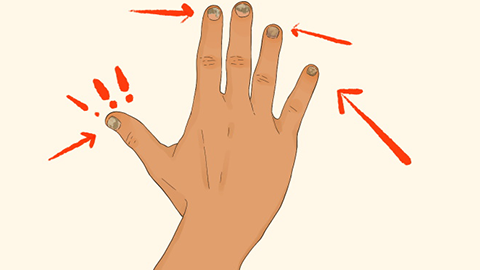
Tinea pedis manifests as maceration (softening and breakdown) and itching of the skin on the fingers or toes, often co-occurring with athlete’s foot symptoms. It predominantly occurs in spring and summer and tends to subside gradually during winter. Gray nail usually begins at the nail matrix (nail root), presenting initially as small white spots on the nail surface. These spots progressively enlarge, causing the nail plate to soften and become depressed. Over time, the nail loses its natural luster, begins to separate from the nail bed (onycholysis), and eventually becomes thickened, discolored (grayish or yellowish-brown), and brittle. Although gray nail often starts in a single nail, it has a high propensity to spread—to other nails and even to close contacts—posing significant transmission risk.
If you develop athlete’s foot, maintaining strict personal hygiene is essential. In severe cases, prompt medical consultation and professional treatment are strongly recommended. We hope this information proves helpful to you.


