


Which department should I visit for a meniscus injury?

Meniscus injury is a highly prevalent condition in daily life, particularly common among young men. When the meniscus is injured, symptoms may include severe knee pain, inability to fully extend the knee spontaneously, and joint swelling. So, which department should one visit for a meniscus injury?
Which Department Should One Visit for a Meniscus Injury?
A meniscus injury should be evaluated in the Department of Orthopedics. Some hospitals have highly specialized sub-divisions, such as a dedicated Knee Joint Department, which is also qualified to diagnose and treat meniscus injuries. Additionally, certain hospitals maintain a Sports Medicine or Sports Trauma Department, which can similarly diagnose and manage meniscus injuries. The meniscus is a fibrocartilaginous structure located within the knee joint, serving critical functions including increasing the contact surface area between joint surfaces, stabilizing the knee joint, and absorbing mechanical stress. During physical activity, it is frequently subjected to injury, leading to localized pain, impaired joint function, and even joint locking (inability to move the joint). Typically, magnetic resonance imaging (MRI) is required to assess the extent and type of meniscal injury, enabling clinicians to select the most appropriate treatment strategy based on individual findings.

The human tibial articular surface features two crescent-shaped structures—one on the medial side and one on the lateral side—known as the medial and lateral menisci, respectively. Each meniscus is thinner centrally but thicker peripherally, and is firmly attached to the joint capsule while remaining relatively mobile (“free-floating”). Composed of fibrocartilage, there is one meniscus on the inner (medial) side and one on the outer (lateral) side of the knee. Importantly, once damaged, the meniscus has very limited capacity for self-repair. Therefore, during routine physical activity, it is essential to protect the menisci—always perform adequate warm-up exercises before engaging in sports or strenuous activity.
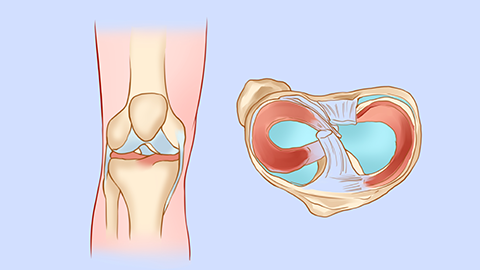
We recommend that patients avoid high-impact or strenuous physical activities in daily life and seek prompt medical attention if any discomfort arises. We hope this information proves helpful.


