What Is a Meniscus?
Aug 24, 2022
Source: Cainiu Health

Dr. Lin Yunfei
Introduction
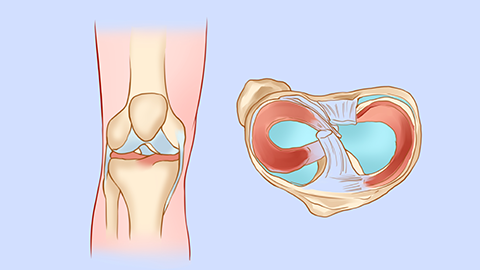
The meniscus is a fibrocartilaginous structure in the knee joint. The posterior portion of the medial meniscus is typically attached to the deep layer of the medial collateral ligament. The superior surface of the meniscus is covered by synovium, and its cross-section is wedge-shaped—complementary to the geometry of the tibial articular surface—to enhance knee joint stability and distribute mechanical stress by increasing the tibial contact area. The meniscus dynamically adapts its position during joint movement.
Medial and lateral menisci appear on the tibial articular surface and are commonly referred to as “menisci.” The peripheral edges of these structures are relatively thick and must be firmly attached to the joint capsule. In contrast, the central portion is comparatively thin and remains free-floating.
What Is a Meniscus?
A meniscus is a fibrocartilaginous structure within the knee joint. The posterior portion of the medial meniscus is typically anchored to the deep layer of the medial collateral ligament. The superior surface of the meniscus is covered by synovial membrane, and its cross-section is wedge-shaped—complementing the geometry of the tibial articular surface. This configuration enhances knee joint stability and helps distribute mechanical stress across the tibial contact area. As the joint moves, the meniscus dynamically adapts its shape to optimize load-bearing capacity. Clearly, the meniscus serves as a protective shock absorber for the articular surfaces; its removal may accelerate joint degeneration. Meniscal injuries are classified into three grades: Grade I reflects early degenerative changes, whereas Grades II and III indicate structural damage or tears.
Avoid high-impact sports—particularly basketball and soccer—as these activities pose a significant risk of meniscal injury. For instance, twisting motions during soccer play frequently damage the posterior horn of the knee meniscus and may even cause complete meniscal tears. Therefore, when exercising, opt for knee-friendly activities such as walking, swimming, or gentle cycling.
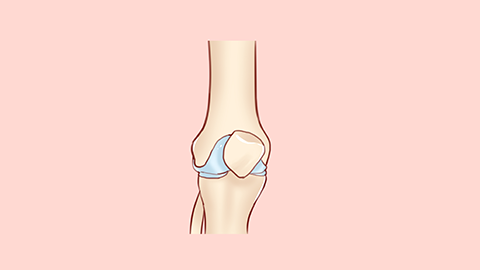
In daily life, maintain a balanced and regular diet. Avoid spicy, irritating, or overly rich foods, refrain from binge eating, and ensure adequate sleep—avoiding late-night hours. We hope this information proves helpful to you.