


Does astigmatism cause sensitivity to bright light?

Many people have astigmatism, which can significantly impair normal vision. When viewing objects, images often appear blurry, and double shadows may even occur—causing considerable difficulty in daily learning and work. To rapidly alleviate these symptoms, it is essential to first understand the correct treatment methods. So, does astigmatism make the eyes sensitive to bright light?
Are eyes with astigmatism sensitive to bright light?
In fact, everyone’s eyes are naturally sensitive to intense light; astigmatism itself is simply a type of refractive error—similar to myopia (nearsightedness) or hyperopia (farsightedness). If left uncorrected, individuals with astigmatism may frequently squint or tilt their head to see more clearly, sometimes leading to visual distortions or illusions. When exposed to bright light, this discomfort is not specifically caused by astigmatism. While healthy eyes naturally react to intense light, uncorrected astigmatism may lead individuals to adopt compensatory behaviors—such as squinting or tilting the head—which mistakenly create the impression that “astigmatism causes sensitivity to bright light.” In reality, however, astigmatism has no direct relationship with light sensitivity.
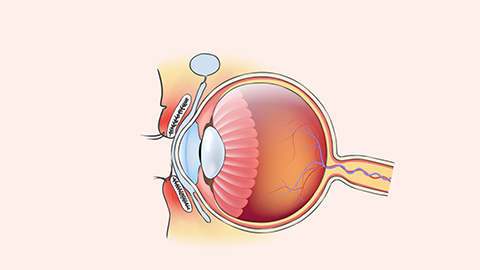
Astigmatism results from an asymmetrical curvature of the cornea, causing light rays to focus at multiple points rather than a single point—a phenomenon known as “astigmatic blur.” Consequently, the primary symptom of astigmatism is blurred vision. However, it does not cause any specific abnormal response to light exposure or stimulation. Regarding myopia, for instance, individuals still experience difficulty seeing clearly under bright light—and such exposure can indeed be harmful to the eyes—but this visual impairment is not attributable to astigmatism. Thus, like myopia, astigmatism does not inherently increase sensitivity to bright light; there is nothing uniquely distinctive about it in this regard.

Bright light exposure causes discomfort to the eyes regardless of whether astigmatism is present. Therefore, when someone squints while viewing objects, the cause may not necessarily be bright light—it could instead stem from uncorrected astigmatism. We hope this explanation proves helpful to you.


