


Why Do People with Myopia Often Squint?

Since individuals with myopia do not need to accommodate when viewing objects up close, their accommodative function tends to be relatively weak. When the balance of extraocular muscle forces is disrupted, binocular vision becomes impaired. In such cases, a person may rely predominantly on one eye for vision while the other deviates outward—a condition known as transient alternating strabismus. So why do people with myopia frequently squint?
Why Do People with Myopia Frequently Squint?
People with myopia often squint because squinting reduces pupil size, thereby limiting the entry of peripheral, disordered light rays into the eye. As a result, only a narrow central beam of light reaches the retina directly, producing a relatively sharper image. The refractive media of the eye include the cornea, aqueous humor, lens, and vitreous body. External light passes through these refractive structures and is focused onto the retina. When light is accurately focused on the retina, clear vision results—this state is termed emmetropia. If light focuses in front of the retina instead, the condition is called myopia.
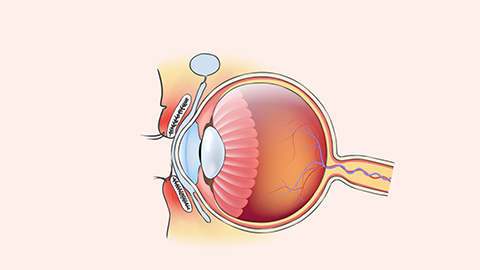
In this situation, the eye attempts to engage its accommodative mechanism to shift the focal point backward onto the retina. However, due to structural changes—such as an elongated axial length and altered refractive properties of the ocular media—some individuals may develop strabismus.

In daily life, patients should maintain a positive mindset, actively cooperate with their physicians during treatment, take prescribed medications regularly and in correct dosages, and pay attention to routine eye care—thus facilitating prompt improvement of their condition. We hope this explanation has been helpful to you.


