


How to treat tenosynovitis effectively and quickly

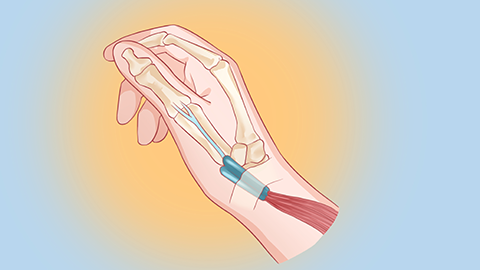
The tendon sheath is a double-layered, tubular, closed synovial membrane structure enveloping tendons, serving as a protective synovial sheath for tendons. In the human body, there are two primary locations: the common tendon sheath for the abductor pollicis longus and extensor pollicis brevis muscles at the distal end of the radius (wrist), and the tendon sheath for the flexor pollicis longus muscle at the head of the first metacarpal bone. Generally, due to occupational and daily activities, the incidence is higher in women than in men. So, how can tenosynovitis be treated effectively and rapidly?
How to Treat Tenosynovitis Effectively and Rapidly
Treatment of tenosynovitis involves reducing causative factors such as excessive physical activity and cold exposure—for example, avoiding direct airflow from fans or air conditioners. Patients should initially reduce workload to prevent repetitive tendon wear. Secondly, cold stimulation may exacerbate inflammation; therefore, it is essential to avoid direct exposure to fans or air-conditioning drafts. Regarding treatment, mild cases may respond well to topical traditional Chinese medicine (TCM) therapies—such as herbal washes that warm the meridians, promote circulation, and relieve pain—or medicated plasters. Acupuncture and massage may also yield favorable results. However, some patients experience poor response to conservative treatments and suffer severe pain. In such cases, corticosteroid injection (local “block”) therapy may be considered.

Tenosynovitis is commonly referred to as “trigger finger.” More colloquially, this means inflammation of the tendon sheath—the outer covering of the tendon—which normally secretes synovial fluid to lubricate and protect the tendon. Repeated performance of the same motion in daily life may subject local tendons to excessive stress and repeated friction, leading to narrowing of the tendon sheath canal and resulting in abnormal interaction between the tendon and its sheath.
In daily life, patients should maintain an optimistic mindset, actively cooperate with their physicians’ treatment plans, take prescribed medications on time and in correct dosages, and pay attention to routine self-care—thus facilitating prompt clinical improvement. We hope this information proves helpful to you.


