


What Should One Eat to Nourish Yin Deficiency?

Yin deficiency and yang deficiency are common syndromes in Traditional Chinese Medicine (TCM); however, most people lack a clear understanding of these conditions and are unaware of their distinctions. Although yin and yang deficiencies often do not cause pronounced discomfort, they can severely compromise physical health and progressively weaken one’s constitution. So, what foods or remedies help nourish yin deficiency?
What to Consume to Nourish Yin Deficiency
Yin deficiency is primarily addressed through nourishing and replenishing yin. Clinically, common types include lung yin deficiency, kidney yin deficiency, stomach yin deficiency, and liver yin deficiency. For lung yin deficiency, treatment focuses on nourishing yin and moistening the lungs; herbal formulas such as Yangyin Qingfei Wan (Nourishing-Yin and Clearing-Lung Pill) and Baihe Gujin Wan (Lily Bulb and Rehmannia Pill) may be used for regulation. Stomach yin deficiency is treated mainly by strengthening the stomach and promoting fluid production; proprietary Chinese medicines such as Weinaian Jiaonang (Stomach-Nourishing and Peace-Capsule), Yangweishu (Stomach-Nourishing Powder), and Moluoting may be employed. For kidney yin deficiency, the primary approach is nourishing yin and tonifying the kidneys; commonly used formulas include Liuwei Dihuang Wan (Six-Ingredient Rehmannia Pill), Dabuyin Wan (Great Yin-Tonifying Pill), and Zuogui Wan (Left-Returning Pill). If kidney yin deficiency reaches an advanced stage—manifesting as heat sensations in the palms, soles, and chest (‘five-center heat’), insomnia, irritability, dry mouth and tongue, and low-grade fever—Baidihuang Wan (White-Rehmannia Pill) may be prescribed to nourish yin and clear heat. Always consult a qualified TCM practitioner before taking any medication.
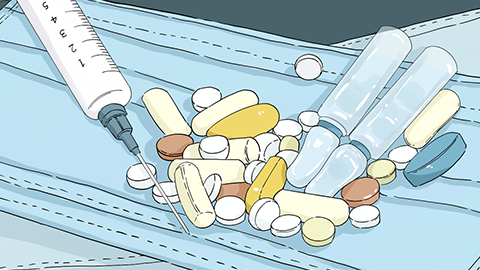
Yin deficiency refers to insufficient yin qi within the body, resulting in imbalance between yin and yang. Without adequate yin to anchor and moisten yang, abnormal physiological manifestations arise. Individuals with yin deficiency commonly experience symptoms such as restlessness, insomnia, dizziness, and night sweats. Some may also report weakness in the lower back and legs or generalized fatigue and limb weakness. Prompt regulation and treatment are essential upon diagnosis to restore normal physiological function.

We recommend that patients maintain a light, balanced diet and engage in moderate physical activity to enhance overall immunity. We hope this information proves helpful.


