What symptoms does a thick yellow tongue coating indicate?
Sep 13, 2022
Source: Cainiu Health

Dr. He Haochen
Introduction
A thick, yellow tongue coating may be caused by cholecystitis, chronic enteritis, or gastritis, and conditions such as damp-heat in the liver and gallbladder or excessive liver fire cannot be ruled out. During the course of illness, the tongue coating is usually thick and may cause bad breath. A normal tongue has a thin, white coating over a light red surface. The tongue coating is produced by stomach qi, and a thick coating typically results from ascending turbid stomach qi. A yellow tongue coating generally indicates internal heat, particularly excessive damp-heat in the stomach.
Some patients often notice a yellowish coating on their tongue, accompanied by bad breath, which causes significant discomfort. What underlying condition does a thick yellow tongue coating indicate?
What Condition Does a Thick Yellow Tongue Coating Indicate?
A thick, yellow tongue coating may result from conditions such as cholecystitis, chronic enteritis, or gastritis. It could also suggest damp-heat in the liver and gallbladder or excessive liver fire. During illness, the tongue coating often becomes thick, contributing to halitosis. Normally, the tongue should have a pale red body with a thin, white coating. The tongue coating is produced by stomach qi, and a thick coating usually indicates an upward surge of turbid stomach qi. A yellow coating generally signifies internal heat, particularly excessive damp-heat in the stomach.
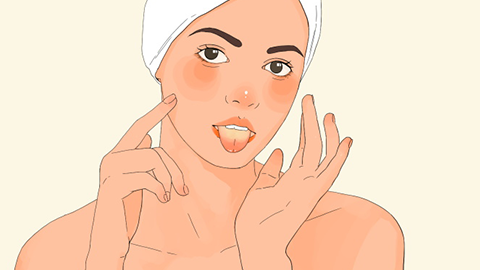
A thick yellow tongue coating indicates internal damp-heat, most commonly due to gastrointestinal damp-heat. Besides the thick yellow coating, symptoms often include abdominal distension, constipation, and foul-smelling stools. Commonly used heat-clearing and detoxifying formulas include Da Cheng Qi Tang (Major Purging Decoction), Tiao Wei Cheng Qi Tang (Regulating Stomach Purging Decoction), or Xiao Cheng Qi Tang (Minor Purging Decoction), which are effective for damp-heat syndromes. If the patient experiences bitter taste and dry throat, Da Chai Hu Granules may be taken. For insomnia and irritability, Chai Hu Jia Long Gu Mu Li Tang (Bupleurum with Dragon Bone and Oyster Shell Decoction) is recommended. If palpitations and limb weakness occur in the afternoon, San Ren Tang (Three Herbs Decoction) can be used.

Dietary adjustments can also help, such as consuming red bean and barley porridge, white radish, silver ear fungus, papaya, etc. Alternatively, traditional Chinese herbal powders made from ingredients like cardamom, coix seed, and dried tangerine peel may be used. Drinking green tea regularly and avoiding spicy, greasy foods, smoking, and alcohol can also support treatment. We hope this information is helpful. Wishing you good health and happiness.