


What should I do if hemorrhoids keep bleeding?
Sep 13, 2022
Source: Cainiu Health

Dr. Li Mingchuan
Introduction
If hemorrhoids are clearly diagnosed and there is persistent bleeding that cannot be controlled with medication, surgical treatment is recommended. However, when most people experience rectal bleeding, self-diagnosing it as hemorrhoids often leads to delayed diagnosis. Therefore, it is essential to visit a hospital to confirm whether the bleeding is truly caused by hemorrhoids or by other underlying conditions, so as to avoid misdiagnosis and delayed treatment. If the bleeding is indeed due to hemorrhoids, local treatment with suppositories may be considered.
In daily life, some people with hemorrhoids always experience bleeding. What should be done when hemorrhoids frequently bleed?
What should be done when hemorrhoids frequently bleed?
If hemorrhoids are clearly diagnosed and persistent bleeding occurs that cannot be controlled with medication, surgical treatment is recommended. However, when most people experience anal bleeding, they often assume it's due to hemorrhoids, which may delay proper diagnosis. Therefore, it's essential to visit a hospital to confirm whether the bleeding is truly caused by hemorrhoids or other underlying conditions, so as to avoid misdiagnosis and delayed treatment. If hemorrhoids are confirmed as the cause, local treatments such as suppositories may be used.
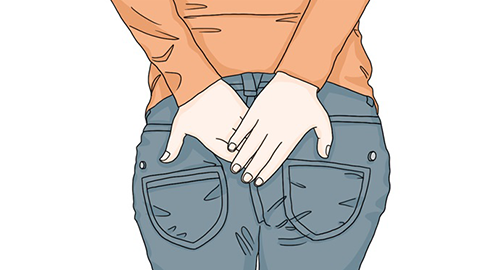
There is a ring-shaped vascular cushion on the inner side of the anal canal, composed of a network of venous vessels, smooth muscle, and connective tissue. During defecation, external forces may push this cushion downward. Normally, it retracts back into the anal canal afterward. When its contractile ability weakens, the anal cushion may become enlarged and prolapse. This may also result from venous varicosities, or poor bowel habits—such as prolonged squatting and extended time spent on the toilet. Both diarrhea and chronic constipation are important contributing factors to hemorrhoids. Long-term malnutrition and physical weakness can lead to relaxation and weakening of the anal sphincter muscles. Individuals who consume alcohol regularly or prefer spicy foods are also at higher risk, as alcohol and spicy substances can irritate the digestive tract mucosa, causing blood vessel dilation and colonic dysfunction, significantly increasing the likelihood of anorectal diseases.
It is recommended that patients visit a reputable hospital to identify the underlying cause. Hemorrhoid ointments or suppositories can be used for treatment. We hope this response is helpful to you. Wishing you good health and happiness.






