


What should I do if my baby has a high fever that won't go away?
Dec 26, 2024
Source: Cainiu Health

Dr. Zhou Xiaofeng
Introduction
High fever refers to a high body temperature. A baby's persistent high fever may be caused by factors such as excessively high environmental temperature, overdressing, upper respiratory tract infection, infantile emergency rash, pneumonia, and others. Treatment may include general care and medication under a doctor's guidance. Normally, it is important to adjust the baby's clothing according to weather changes and avoid taking the baby to crowded, poorly ventilated places.
Generally speaking, high fever refers to high body temperature. A baby's persistent high fever may be caused by high environmental temperature, excessive clothing, upper respiratory tract infection, infantile emergency rash, pneumonia, or other reasons. Treatment can be carried out under a doctor's guidance using general treatments, medications, and other methods. Detailed analysis is as follows:
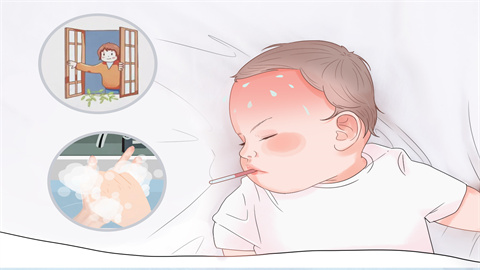
1. High Environmental Temperature
A baby's body temperature regulation center is not yet fully developed. When in a high-temperature environment, the body has difficulty dissipating heat, causing heat to accumulate internally and resulting in persistent high fever. It is recommended to maintain a suitable indoor temperature, generally controlled between 22°C and 26°C. Avoid keeping the baby in a hot, stuffy environment for extended periods, and ensure proper indoor ventilation.
2. Excessive Clothing
Babies are very active and have a high metabolic rate. If dressed in too many layers or overly thick clothing, heat cannot be effectively dissipated, which may cause elevated body temperature that is difficult to reduce. It is recommended to dress the baby in an appropriate amount of loose, breathable clothing according to the weather and indoor temperature. Avoid excessive bundling, and regularly check areas such as the neck and back; the skin should feel warm and dry.
3. Upper Respiratory Tract Infection
Upper respiratory tract infections are usually caused by viral infections, such as rhinovirus or influenza virus. After a virus or bacteria enters the baby's body, it triggers an immune response, producing endogenous pyrogens that act on the body's temperature regulation center, raising the temperature set point, thus causing persistent high fever. Symptoms such as coughing and runny nose may also be present. Medications such as Pediatric Paracetamol, Chlorpheniramine, and Artificial Cowbrick Granules, Paracetamol Suspension Drops, or Amoxicillin and Clavulanate Potassium for Suspension may be used under a doctor's guidance.
4. Infantile Emergency Rash (Roseola)
Infantile emergency rash is mainly caused by infection with human herpesvirus 6. After viral infection, massive viral replication occurs in the baby's body, triggering a strong immune response, which may lead to persistent high fever. Symptoms such as irritability and decreased appetite may also appear. Patients may follow medical advice to use medications such as Paracetamol Suspension Drops, Ibuprofen Granules, or Calamine Lotion for treatment.
5. Pneumonia
Pneumonia may be caused by infection with pathogens such as bacteria, viruses, or mycoplasma. After the pathogen invades the lungs, it triggers an inflammatory response in the lungs, releasing a large amount of inflammatory mediators that stimulate the body's temperature regulation center, causing persistent high fever. Symptoms such as coughing and sputum production may also occur. Patients may follow a doctor's recommendations to use medications such as Azithromycin for Suspension, Ambroxol Oral Solution, or Ceftriaxone Sodium for Injection for treatment.
In daily life, it is important to adjust clothing promptly according to weather changes, avoid taking the baby to crowded, poorly ventilated places, especially during disease outbreak seasons; maintain the baby's personal hygiene, wash hands frequently, and avoid contact with infection sources.


