


Which incision site is better for breast augmentation with implants?

Breast augmentation with implants involves surgically placing implants made of materials such as silicone or expanded polytetrafluoroethylene (ePTFE) into the chest to achieve breast enhancement. The general reference price for breast augmentation surgery ranges from 12,000 to 200,000 yuan per procedure, and noticeable improvement is typically seen within 15 to 40 days. There are several incision options, generally including the armpit, areola, inframammary fold, vertical cleavage, and parasternal areas. If necessary, it is recommended to visit a reputable hospital and undergo the procedure under the guidance of a qualified physician.
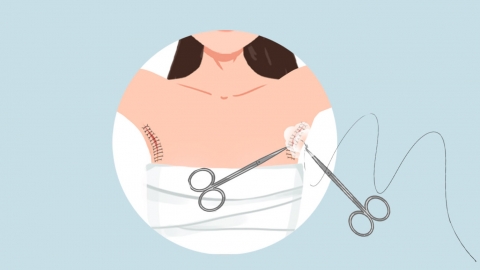
1. Armpit (Transaxillary)
The incision is made beneath the armpit, away from the breast itself, making the scar relatively inconspicuous. This approach avoids leaving scars on the breast, but the surgical path is longer and requires higher technical skill from the surgeon. The advantage is that the scar is well-hidden, but the procedure is more complex and may require a longer recovery period.
2. Areola (Periareolar)
The incision is made around the edge of the areola, typically matching the color of the areola, making the scar less noticeable. This incision is suitable for patients who also require adjustment of the size or position of the areola. The advantage is that the scar blends well with the areola's color, but the procedure is technically more challenging and may affect nipple sensation, requiring a longer recovery period.
3. Inframammary Fold
The incision is placed along the natural crease beneath the breast, where the scar is usually hidden within the breast fold. This approach is suitable for women with larger or sagging breasts, as it provides a direct and easier surgical path. The advantage is a hidden scar and a shorter surgical path, but it may not be suitable for women with smaller breasts, as the fold may not be prominent enough, potentially resulting in a more visible scar.
4. Vertical Cleavage (Vertical Transareolar)
This incision extends downward from the nipple to the lower edge of the breast and is typically used for larger implants. The advantage is a smaller incision and shorter recovery time; however, the disadvantage is a tendency to leave a more visible scar, which can affect aesthetics.
5. Parasternal
The incision is located beside the breastbone, close to the midline of the breast. This approach is less common and is typically reserved for special cases, such as breast reconstruction surgery. The advantage is a direct surgical path, but the resulting scar may be more visible and affect aesthetics.
After surgery, patients require a certain recovery period. During this time, strenuous exercise and lifting heavy objects should be avoided to prevent interference with the healing process and reduce the risk of complications such as bleeding, swelling, or infection.


