


What are the cognitive impairments associated with underdeveloped brainstem?
Mar 13, 2025
Source: Cainiu Health

Dr. Lv Zhiqin
Introduction
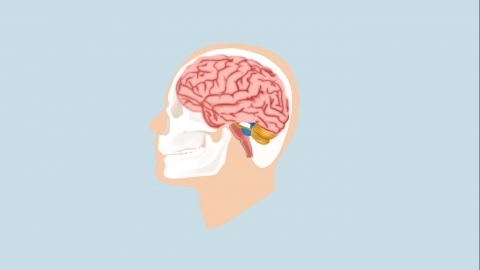
In general, cognitive impairments associated with underdeveloped brainstem may include inattention, impaired short-term memory, language expression disorders, weak logical thinking, and abnormal visual perception. These symptoms may vary among individuals and may gradually improve with growth and development or persist and affect quality of life.
Generally, cognitive impairments associated with underdeveloped brainstem may include inattention, impaired short-term memory, difficulties in verbal expression, weak logical thinking, and abnormal visual perception. Details are as follows:
1. Inattention
Children may struggle to focus attention on specific tasks or objects. For example, they may be easily distracted by surrounding sounds or objects in the classroom and be unable to concentrate on what the teacher is saying. Even in relatively quiet environments, they may display wandering gaze and find it difficult to maintain focus on a single task for an extended period.
2. Impaired Short-Term Memory
They may have difficulty remembering recent events or newly learned information—for instance, forgetting stories they have just heard or words they have just memorized. In daily life, they may place a toy somewhere and then immediately forget where they put it.
3. Language Expression Disorders
They may experience difficulties in expressing thoughts and needs, possibly speaking later than typical peers, or having a limited vocabulary. They may only use simple words and short sentences to communicate, struggling to clearly and coherently describe events or express personal feelings.
4. Weak Logical Thinking
They may find it difficult to understand logical relationships between things—for example, being unable to correctly classify objects according to their attributes during simple sorting games. They may also demonstrate confusion regarding causal relationships, sequential order, and other logical concepts, failing to understand why one task should be performed before another.
5. Abnormal Visual Perception
They may inaccurately perceive visual information such as the shape, color, and size of objects—for example, being unable to accurately distinguish between similar shapes, confusing circles with ovals. They may also experience visual-spatial perception issues, such as bumping into objects while walking or being unable to accurately judge the distance and position of objects.
Symptoms may vary among individuals and may either improve gradually with growth and development or persist and affect quality of life. Therefore, early assessment and intervention are recommended for individuals with underdeveloped brainstems to maximize improvement in cognitive function and quality of life.



