


Is Rehmannia glutinosa the same as the Rehmannia root decoction?

Rehmannia glutinosa (Shu Di Huang) is not the same as raw Rehmannia root (Di Huang Yin Zi). Although the two are related, they differ fundamentally in medicinal properties and functions. If you have any concerns, it is recommended to consult a healthcare professional in advance. Detailed explanation is as follows:
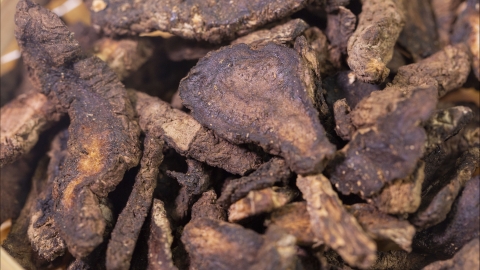
Di Huang Yin Zi typically refers to the raw or fresh form of Rehmannia root, which has effects of clearing heat, cooling the blood, promoting body fluid production, and relieving thirst. It is suitable for symptoms such as yin deficiency caused by heat syndromes and bleeding due to excessive blood heat. Its medicinal property is cold in nature, enabling it to clear internal heat pathogens and commonly used in treating acute conditions. This characteristic makes Di Huang Yin Zi effective in treating heat-related diseases.
Shu Di Huang, on the other hand, is processed through steaming and drying. Its medicinal property changes from cold to warm, and its primary functions are nourishing yin, enriching kidney essence, and replenishing marrow. Shu Di Huang is used for chronic deficiency syndromes caused by yin deficiency of the liver and kidney or insufficiency of essence and blood, such as weakness and soreness of the lower back and knees, dizziness, tinnitus, and similar symptoms. After processing, Shu Di Huang emphasizes nourishing and supplementing effects, which contrasts distinctly with the heat-clearing property of Di Huang Yin Zi.
When using these herbs, it is important to clearly distinguish their processed forms. Raw Rehmannia should not be used for conditions of deficiency cold, and Shu Di Huang should be used cautiously in cases of internal dampness and turbidity. Proper differentiation and selection are necessary before administration to avoid confusion between the indications of raw and processed forms.


