


Is mint edible?
Jun 27, 2025
Source: Cainiu Health

Dr. Yu Yongchao
Introduction
Under normal circumstances, mint is edible, but should be consumed in moderation. Mint has a cooling property and individuals with cold deficiency of the spleen and stomach or diarrhea should avoid excessive consumption to prevent additional stress on the gastrointestinal system. Meanwhile, pregnant women should consume mint cautiously and avoid drinking large amounts of mint tea, to prevent potential adverse effects from mint's stimulatory components. In addition, mint contains volatile oils that evaporate easily.
Generally speaking, mint is edible, but should be consumed in moderation. A detailed explanation is as follows:
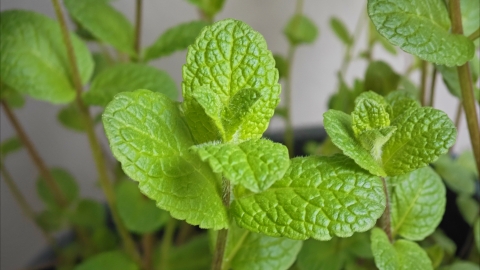
Mint is an ingredient commonly used both culinarily and medicinally. Its leaves are rich in volatile oils, including menthol and mint ketone, offering a uniquely cool flavor. They can be washed and used directly as a salad ingredient, seasoning spice, or steeped to make mint tea, providing a refreshing taste experience. Mint can also be used in making desserts, beverages, and even certain dishes as an aromatic auxiliary ingredient to enhance flavor complexity. From a nutritional and health perspective, mint contains vitamin C, dietary fiber, and minerals such as calcium and iron. Traditional Chinese medicine considers mint to be cool in nature and pungent in taste, with functions of dispersing wind-heat, clearing the head and eyes, and relieving sore throat and rashes. Moderate consumption may help alleviate symptoms such as sore throat and heatstroke-related thirst.
As mint is cooling in nature, individuals with cold deficiency of the spleen and stomach or diarrhea should avoid excessive consumption to prevent additional gastrointestinal burden. Additionally, pregnant women should consume mint cautiously and especially avoid drinking large amounts of mint tea to prevent potential adverse effects from mint's stimulative components. Moreover, mint contains volatile oils that easily evaporate; therefore, it should not be cooked for extended periods to avoid losing its active ingredients, which may affect both taste and efficacy.


