


What are the differences between early-stage skin cancer and moles?

In general, early-stage skin cancer and moles exhibit significant differences in appearance, growth changes, color presentation, border characteristics, and accompanying symptoms. A detailed analysis is as follows:
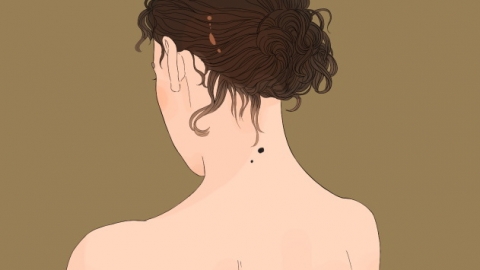
1. Appearance: Early-stage skin cancer often appears as irregular patches, nodules, or ulcers, with rough or scaly surfaces that may exude fluid or bleed. Moles are typically round or oval in shape, regular in form, with relatively smooth surfaces, and are mostly flat or slightly raised small nodules.
2. Growth Changes: Early-stage skin cancer shows noticeable changes in a short period, such as rapid enlargement, thickening, or alterations in shape. Moles generally remain stable over long periods, growing slowly with minimal changes in form or size over many years.
3. Color Presentation: Early-stage skin cancer often displays uneven coloring, possibly containing a mixture of brown, black, red, white, and other tones. Moles typically have uniform coloring, most commonly black, brown, or tan, with some being skin-colored and maintaining consistent pigmentation.
4. Border Characteristics: Early-stage skin cancer usually has unclear borders, with edges that may be ragged, blurred, or notched, appearing jagged or irregular. Moles typically have clear, well-defined borders that sharply separate from the surrounding normal skin.
5. Accompanying Symptoms: Early-stage skin cancer may be accompanied by localized itching, pain, or non-healing ulcers. Moles generally cause no discomfort and rarely present with itching, pain, or ulceration. If not subjected to repeated friction or irritation, they usually remain stable.
In daily life, it is important to observe any abnormal changes on the skin surface, avoid repeated friction or irritation of suspicious skin lesions, and maintain skin cleanliness. If abnormal skin growths or morphological changes are detected, regular monitoring through medical checkups can help track changes and maintain healthy skin.


