


Can the skin and core of a ginseng fruit be eaten?
Aug 29, 2025
Source: Cainiu Health

Dr. Yu Yongchao
Introduction
If the skin of the ginseng fruit is smooth, intact, and free of pesticide residues, consuming the skin after thorough washing can provide additional dietary fiber, helping to promote intestinal motility. The core of the fruit has a soft texture, with small seeds that are not noticeably astringent, and eating it when mature does not cause discomfort, preserving the complete nutritional content of the fruit. However, if the skin of the ginseng fruit is damaged, moldy, or may have pesticide residues, consuming the skin may lead to ingestion of harmful substances, potentially causing gastrointestinal discomfort.
Generally speaking, under normal circumstances, the fresh and mature pepino melon (人参果) can be eaten directly after thoroughly washing its peel, and the core (including the seed part) is also edible. However, if the peel is damaged or contaminated, the core is immature, or an individual has a weak digestive system, consumption should be cautious or the core should be removed. Detailed analysis is as follows:
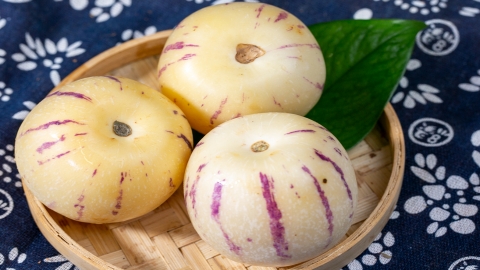
If the pepino melon's peel is smooth, intact, and free of pesticide residues, eating the peel after thorough washing allows for greater intake of dietary fiber, which helps promote intestinal motility. The core is soft in texture, with small seeds that are not bitter or astringent. It is safe to consume the core along with the flesh once fully mature, as it retains the complete nutritional value of the fruit.
If the pepino melon's peel is damaged, moldy, or potentially contaminated with pesticides (not thoroughly washed), eating the peel may lead to ingestion of harmful substances, causing gastrointestinal discomfort. For some individuals with weaker digestion, the seeds in the core might increase the digestive burden, resulting in bloating. If the core turns black or tastes bitter, it indicates the fruit may have spoiled, and consumption could pose a risk to health.
Before consuming pepino melon, thoroughly wash the peel to remove any attached impurities and pesticide residues. If discomfort such as abdominal pain or diarrhea occurs after consumption, stop eating it immediately and seek timely medical attention. When purchasing, prioritize moderately mature pepino melons with intact appearances to ensure food safety.






