


How to Determine the Cause of a Protruding Baby's Belly Button

To determine the cause of a baby's protruding navel, one can comprehensively analyze potential causes by observing the appearance of the bulge, considering the infant’s age, checking the response to gentle pressure, noting triggering actions, and screening for accompanying symptoms, followed by targeted management accordingly. If the protruding area becomes red, swollen, or painful, if the baby cries persistently, or if the bulge continues to enlarge, prompt medical consultation is recommended.
1. Observe the bulge characteristics: Examine the shape and size of the protrusion. A soft, painless bulge that enlarges when the baby cries is typically an umbilical hernia. In contrast, a hard, fixed bulge or one accompanied by skin abnormalities may indicate other abdominal conditions. Initial differentiation of common causes can be made based on these morphological differences.
2. Consider the age stage: Protrusions appearing in the neonatal period are often physiological umbilical hernias caused by incomplete development of the umbilical tissues. If the bulge persists beyond infancy or newly appears during school age, pathological factors should be considered.
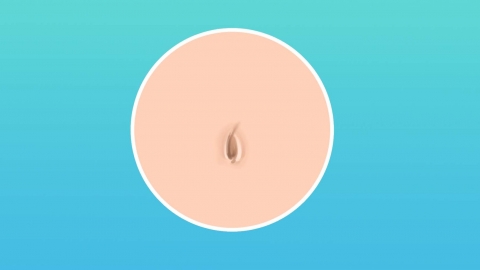
3. Assess response to pressure: Gently press on the bulge. If it can be pushed back in without significant resistance, it is likely an umbilical hernia. If the infant cries intensely during pressing, the bulge cannot be reduced, or a hard mass is felt, other abdominal pathologies should be suspected.
4. Note triggering actions: Observe whether the bulge becomes more prominent when the baby cries, coughs, or strains during bowel movements. Bulges that worsen with increased intra-abdominal pressure are commonly associated with umbilical hernia or weak abdominal muscles.
5. Check for accompanying symptoms: If symptoms such as fever, vomiting, or abdominal distension are present, they may indicate infection or gastrointestinal issues. A simple bulge without other discomfort is usually a physiological umbilical hernia. Accompanying symptoms help rule out pathological causes.
Treatment depends on the underlying cause. Most umbilical hernias resolve spontaneously without specific intervention, while pathological protrusions require medical evaluation and treatment as directed. To support recovery, avoid excessive crying or straining in infants to minimize increased abdominal pressure, dress the baby in loose clothing to prevent friction on the navel, and regularly clean the skin around the umbilicus to promote local healing.


