


How to treat a 5-month-old baby's blocked tear duct?

Treatment options for nasolacrimal duct obstruction in a 5-month-old infant include lacrimal sac massage, topical medication, lacrimal irrigation, probing of the tear ducts, and dacryocanaloplasty. Conservative treatments are preferred initially, with treatment plans adjusted progressively based on the severity of the blockage. If the baby develops symptoms such as redness and swelling of the lacrimal sac, pus discharge, or persistent symptoms lasting more than three months, prompt medical attention is recommended.
1. Lacrimal Sac Massage: Gently press downward from the inner corner of the eye over the lacrimal sac area using the pad of your index finger. Apply gentle, rhythmic pressure for 5–10 minutes, two to three times daily. This helps rupture any residual membrane causing the blockage through pressure and is suitable for mild cases.
2. Topical Medication: If infection is present—evidenced by increased eye discharge (mucus/pus) and redness—antibiotic eye drops may be used under medical supervision to control inflammation before proceeding with other treatments, helping prevent worsening of the obstruction due to infection.
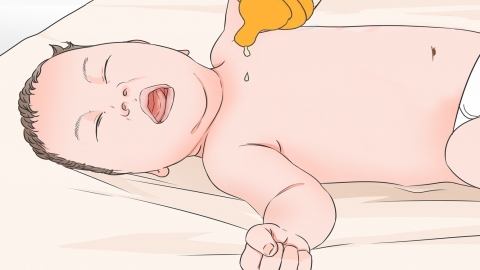
3. Lacrimal Irrigation: A specialized irrigation solution is injected through the punctum into the tear duct to clear secretions or mild adhesions at the site of narrowing. This procedure serves both diagnostic and therapeutic purposes and must be performed by trained healthcare professionals.
4. Lacrimal Probing: A thin probe is gently inserted to open the obstructed tear duct, effectively clearing the blockage. This minimally invasive procedure is commonly used when conservative treatments fail and is generally well-tolerated in 5-month-old infants.
5. Dacryocanaloplasty (Lacrimal Duct Dilation): Used when significant narrowing of the tear duct is present. After successful probing, the duct may be dilated to increase its diameter, reducing the risk of re-obstruction. Postoperative care is essential to prevent infection.
Maintain good eye hygiene by cleaning the baby’s eyes with sterile cotton swabs to remove discharge; avoid touching or rubbing the baby’s eyes with hands; wash hands thoroughly before performing massage; and clean the baby’s face promptly after feeding to minimize eye irritation and support recovery.


