


Should you puncture blisters caused by an oil burn?

Generally speaking, whether to puncture a blister caused by hot oil scalding depends on the condition of the blister. Small blisters are not recommended to be punctured, while large blisters or those affecting movement may be carefully treated. If in doubt, it is advisable to seek medical advice promptly. Specific analysis is as follows:
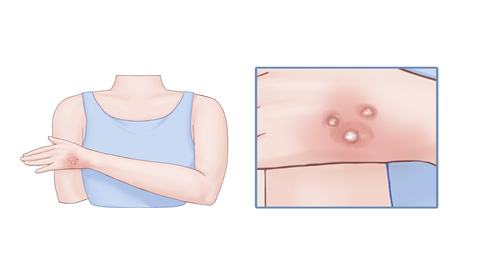
If the scald blister is small (less than 1 cm in diameter) and there is no obvious swelling, pain, or breakage, the blister skin can protect the wound and prevent bacterial infection. In such cases, puncturing is not recommended. Keeping the blister intact allows it to be naturally absorbed and resolved, reducing the risk of infection and promoting spontaneous healing.
If the scald blister is large (more than 1 cm in diameter), or located in areas prone to friction such as joints or palms, where daily activities may be affected, the excessive fluid inside increases the risk of rupture. After disinfection, a sterile needle can be used to gently puncture the edge of the blister to slowly drain the fluid, while preserving the blister skin to cover the wound. Avoid directly peeling off the skin, which could expose the wound.
Immediately after an oil burn, the affected area should be rinsed under cool running water for 15–20 minutes. Ensure all tools used for blister treatment are sterile, and avoid touching the wound directly with hands. Afterwards, keep the wound clean and dry, and apply burn ointment as needed. Seek medical attention promptly if signs of infection—such as redness, swelling, or pus—occur.


