How long does it take for lidocaine to take effect?
Nov 25, 2025
Source: Cainiu Health

Dr. Wang Lei
Introduction
Lidocaine is a local anesthetic, with an onset time typically ranging from 1 to 5 minutes. The speed of onset varies depending on the route of administration: infiltration anesthesia has the fastest onset, followed by intravenous injection, while intrathecal anesthesia is somewhat slower. The duration of action lasts approximately 1 to 3 hours. If allergic reactions, abnormal breathing, or inadequate efficacy occur after use, medical attention should be sought promptly.
Lidocaine is a local anesthetic with a typical onset time of 1–5 minutes. The speed of onset varies depending on the route of administration: local infiltration anesthesia acts the fastest, intravenous injection is next, and intrathecal anesthesia is slightly slower. The duration of action is approximately 1–3 hours. If allergic reactions, abnormal breathing, or inadequate effect occur after use, medical attention should be sought promptly.
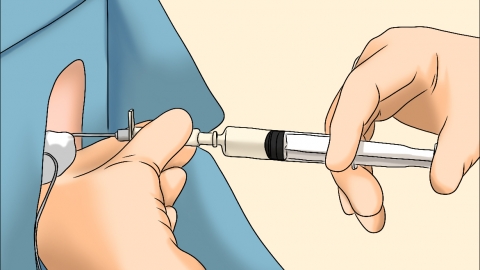
In local infiltration anesthesia, lidocaine acts directly on local nerve endings, producing an anesthetic effect within 1–2 minutes. It is suitable for minor surgeries or localized pain relief. The drug concentration typically ranges from 0.5% to 1%, and the onset speed is related to the diffusion area of the solution.
With intravenous injection or intrathecal anesthesia, the drug must reach the target site via systemic circulation, resulting in an onset time of about 2–5 minutes. This method is used for general or extensive anesthesia. The onset speed is influenced by dosage, injection rate, and individual metabolic rate; individuals with faster metabolism may experience slightly quicker onset.
After using lidocaine, keep the treated area clean to prevent infection, avoid vigorous activity to prevent abnormal drug diffusion, monitor changes in skin color and sensation at the site, and follow medical instructions regarding dosage and application area to ensure safe use.