Can a laryngoscopy still be effective after having a fish bone stuck for 10 days?
Nov 26, 2025
Source: Cainiu Health

Dr. Lu Cheng
Introduction
If a sensation of a foreign body, pain, or discomfort during swallowing persists for 10 days after a fish bone became lodged, and there is no evidence that the bone has been expelled or dissolved, laryngoscopy is usually effective for detection. Laryngoscopy allows clear visualization of the mucosal condition in the pharynx; if the fish bone remains lodged in a superficial location within the throat, it can often be directly removed using instruments, thereby relieving symptoms.
Generally, if discomfort persists 10 days after a fish bone becomes lodged and the bone has not migrated too deeply, laryngoscopy is usually effective. However, if there are no obvious symptoms or the fish bone has already dislodged, the usefulness of laryngoscopy is limited. If in doubt, it is recommended to seek medical advice early. Detailed analysis is as follows:
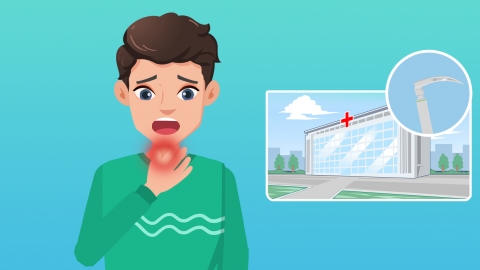
If a sensation of a foreign body, pain, or difficulty swallowing persists 10 days after a fish bone becomes lodged, and there is no evidence that the bone has been expelled or dissolved, laryngoscopy is typically effective for detection. At this stage, laryngoscopy allows clear visualization of the mucosal condition in the throat. If the fish bone remains in a superficial location within the pharynx, it can often be removed directly using instruments, thereby relieving discomfort.
If there are no significant throat symptoms 10 days after the incident, or if the fish bone has migrated deeper into the esophagus, the effectiveness of laryngoscopy is limited. The absence of symptoms may indicate that the bone has naturally dislodged, become encapsulated by tissue, or dissolved, making further laryngoscopic examination unnecessary. If the bone has entered the esophagus, laryngoscopy cannot reach that area, and other diagnostic methods are required for accurate localization.
After a fish bone becomes lodged, never attempt self-treatment by swallowing food boluses or drinking vinegar. If discomfort persists beyond 24 hours, prompt medical attention is essential to avoid complications such as displacement of the bone or infection due to delayed diagnosis.