Should you remove the earring if your ear piercing is oozing pus?
Nov 26, 2025
Source: Cainiu Health

Dr. Liu Wenmin
Introduction
If the ear piercing only has mild pus discharge, without obvious redness, swelling, or worsening pain, and the earring material is safe (such as sterling silver or pure gold) and securely in place, it may be left in temporarily. Keeping the earring in helps maintain the ear piercing tract and prevents healing that would require repiercing. Simply clean the affected area daily with saline solution and keep the piercing dry.
Generally, if the ear piercing is slightly oozing pus but the earring is not loose, it can be left in place temporarily. However, if the discharge is severe or the earring causes discomfort, it should be removed promptly. If in doubt, it is advisable to seek medical advice early. Detailed analysis is as follows:
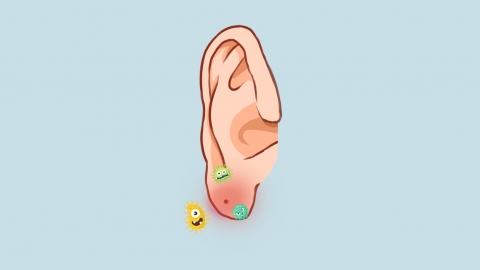
If the ear piercing only has mild pus discharge, without significant redness, swelling, or increased pain, and the earring material is safe (such as sterling silver or pure gold) and securely fastened, the earring may remain in place for now. Keeping the earring in helps maintain the piercing channel and prevents healing that might require re-piercing. Simply clean the affected area daily with saline solution and keep the piercing dry.
If there is substantial pus discharge accompanied by obvious redness, swelling, heat, and pain, or if the earring material is questionable or becomes loose or crooked, the earring should be removed immediately. These symptoms may indicate an infection worsened by irritation from the earring. Removing the earring allows the piercing to be fully exposed, facilitating cleaning and anti-inflammatory care, reducing continuous irritation from foreign objects, and preventing the spread of inflammation.
In daily life, maintain proper hygiene of the ear piercing and avoid frequent touching. Removed earrings should be properly disinfected. If pus discharge persists for more than three days without improvement, seek medical attention promptly and undergo anti-infective treatment under a doctor's guidance.