


What should I do if one nostril is blocked and I can't breathe through it?

Generally, nasal congestion on one side may be caused by factors such as prolonged lateral decubitus position, environmental irritants, allergic rhinitis, deviated nasal septum, or nasal polyps. Depending on the specific condition, patients can improve symptoms through general management, medication, or surgical treatment. A detailed analysis is as follows:
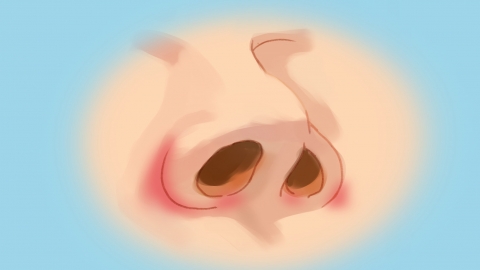
1. Lateral Decubitus Pressure: Long-term sleeping on one side causes blood vessels in the dependent nasal cavity to become congested and dilated due to gravity, narrowing the nasal passage and leading to blockage. Adjusting sleep posture promptly—switching to supine or alternating lateral positions—and gently massaging both sides of the nasal bridge can help promote blood circulation.
2. Environmental Irritation: Inhaling dust, smoke, or other irritants can cause nasal mucosa to swell and secrete more mucus, resulting in nasal obstruction. It's important to immediately leave polluted environments, rinse the nose with saline solution to remove foreign particles, and wear a mask outdoors for protection.
3. Allergic Rhinitis: Exposure to allergens such as pollen or house dust mites triggers swelling and congestion of the nasal mucosa, causing unilateral nasal congestion accompanied by nasal itching and sneezing. Under medical guidance, medications like cetirizine hydrochloride tablets, budesonide nasal spray, and montelukast sodium chewable tablets may be used. Once the allergen is identified, avoidance is essential.
4. Deviated Nasal Septum: An abnormal deviation of the nasal septum toward one side compresses the nasal mucosa and blood vessels, leading to persistent unilateral nasal obstruction, often accompanied by headaches. As directed by a physician, treatments may include赛洛唑啉 (xai-luo-zuo-lin) hydrochloride nasal drops, mometasone furoate nasal spray, or Biyuan Tongqiao granules. In severe cases, surgical correction of the nasal septum may be necessary.
5. Nasal Polyps: Hyperplasia of the nasal mucosa forms polyps that obstruct one nasal passage, causing progressively worsening nasal blockage and often associated with reduced sense of smell. Under medical supervision, treatment options include prednisolone tablets, fluticasone propionate nasal spray, and azithromycin dispersible tablets. If drug therapy fails, endoscopic nasal polypectomy may be performed.
In daily life, maintain indoor air humidity, regularly clean the home environment to reduce allergens, and avoid picking the nose to prevent damage to the nasal mucosa. Persistent unilateral nasal congestion should not be ignored; timely medical evaluation is crucial for identifying the underlying cause and enabling early intervention to effectively restore normal nasal breathing.


