


What causes a stiff and swollen toe, and what should be done about it?
Dec 01, 2025
Source: Cainiu Health

Dr. Li Feng
Introduction
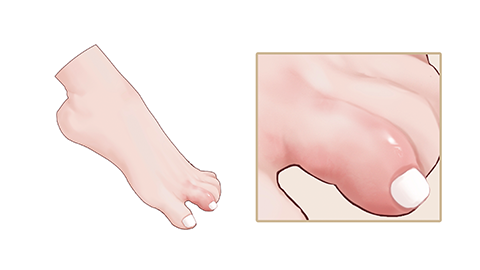
In general, hard swelling of the toes may be caused by external compression, ill-fitting shoes or socks, gouty arthritis, paronychia, or purulent tenosynovitis. Depending on the specific situation, patients can choose appropriate management approaches such as conservative treatment, medication, or surgical intervention. Swollen and hardened toes should not be ignored; in daily life, it is important to wear properly fitting footwear and avoid trauma or pressure.
Generally, hard and swollen toes may be caused by external compression, ill-fitting shoes or socks, gouty arthritis, paronychia, or purulent fingertip inflammation. Depending on the specific situation, patients can improve symptoms through general management, medication, or surgical treatment. Detailed analysis is as follows:
1. External Compression
If a toe is struck by a heavy object or hits a hard surface during walking, local tissue damage, bleeding, and swelling may occur, causing the area to become firm. Immediately stop strenuous activity and apply an ice pack to reduce swelling. After 48 hours, switch to warm compresses to promote absorption of the hematoma.
2. Ill-Fitting Shoes or Socks
Tight shoes or constricting socks can compress the toes, impair blood circulation, and lead to fluid accumulation and swelling. Switch to loose, breathable footwear and socks, avoid prolonged walking, and elevate the feet during rest to promote venous return.
3. Gouty Arthritis
Abnormal uric acid metabolism leads to deposition of urate crystals in the toe joints, triggering an inflammatory response that causes redness, swelling, hardness, and severe pain. Follow medical advice to take allopurinol tablets, febuxostat tablets, or indomethacin enteric-coated tablets, and avoid high-purine foods in the diet.
4. Paronychia
Over-trimming toenails or trauma may allow bacterial infection of the nail fold, causing inflammation, redness, hardness, pain, and pus formation. Under medical guidance, disinfect with iodophor, apply mupirocin ointment topically, take cefradine capsules orally, and undergo incision and drainage if abscess forms.
5. Purulent Fingertip Inflammation (Felons)
Bacterial invasion following skin injury on the fingertip or toe tip can cause subcutaneous pus-forming infection, resulting in swollen, hard, and severely painful toes. Seek immediate medical attention. Take amoxicillin capsules or levofloxacin hydrochloride tablets as prescribed, and undergo surgical incision and drainage to remove pus.
Swollen and hardened toes should not be ignored. In daily life, wear properly fitting shoes and socks, and avoid trauma or compression. If swelling worsens, pain becomes unbearable, or fever develops, seek timely medical evaluation to identify the underlying cause. Proper diagnosis and treatment are essential to prevent disease progression and negative impacts on quality of life.



