


What causes black raised bumps on the leg that are not painful or itchy, and what should be done about them?

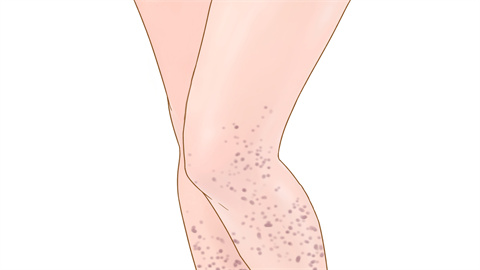
Generally, black raised bumps on the legs that are not painful or itchy may be caused by pigmented nevi, skin keratin accumulation, sebaceous cysts, pigmented urticaria, or seborrheic keratosis. Depending on the specific situation, improvements can be made through general care, medication, or surgical treatment. Detailed analysis is as follows:
1. Pigmented Nevus
A benign lesion formed by the clustering of melanocytes in the skin, appearing as a black raised bump with slow growth. Avoid repeated friction or irritation, practice daily sun protection, and no special treatment is needed if the lesion remains unchanged.
2. Skin Keratin Accumulation
Dryness and frequent friction on the leg skin can lead to thickening and buildup of the stratum corneum, forming black raised bumps. Regularly exfoliate with a gentle scrub to remove dead skin cells, apply moisturizing lotion, and wear soft clothing to reduce friction.
3. Sebaceous Cyst
Blockage of sebaceous gland ducts causes sebum accumulation and cyst formation, which may appear black due to pigmentation. If uninfected, observation is sufficient. In case of infection, topical use of mupirocin ointment or fusidic acid cream under medical guidance, oral cephuroxime axetil tablets, and, if necessary, surgical removal of the sebaceous cyst may be required.
4. Pigmented Urticaria
Activation and aggregation of mast cells trigger skin reactions, resulting in black or brownish raised bumps. Follow doctor’s advice to take loratadine tablets or levocetirizine hydrochloride oral solution, apply mometasone furoate cream topically, and avoid contact with irritants such as alcohol.
5. Seborrheic Keratosis
Caused by skin aging leading to proliferation of keratinocytes, resulting in black raised bumps, commonly seen in middle-aged and elderly individuals. Under medical supervision, topical tretinoin cream or adapalene gel may be used, or lesions may be removed via liquid nitrogen cryotherapy. Keep the wound dry after treatment.
In daily life, maintain proper cleansing and moisturizing of leg skin, minimize friction and sun exposure. Seek prompt medical attention at a dermatology clinic if the bump grows rapidly, ulcerates, or becomes painful. Regular skin examinations can effectively prevent worsening of skin conditions.


