


What are the differences between "big two positive" and "big three positive"?

Both "Big Two Positive" and "Big Three Positive" refer to serological states following hepatitis B virus infection. The core differences between them lie in viral markers, level of viral replication, infectivity, risk of liver function damage, and clinical prognosis. A detailed analysis is as follows:
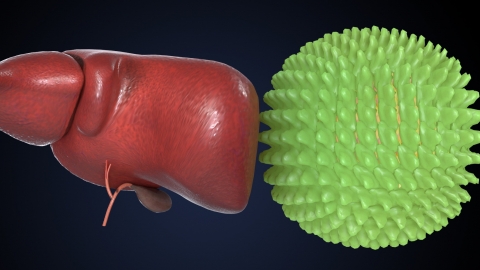
1. Viral markers: "Big Two Positive" refers to positivity for hepatitis B surface antigen (HBsAg) and hepatitis B e-antigen (HBeAg). In contrast, "Big Three Positive" includes positivity for three markers—HBsAg, HBeAg, and hepatitis B core antibody (anti-HBc)—with the additional presence of anti-HBc being the most obvious distinction.
2. Level of viral replication: Patients who are "Big Three Positive" typically exhibit high levels of viral replication, with generally elevated results on hepatitis B virus DNA (HBV DNA) testing. Viral replication in "Big Two Positive" patients is relatively unstable—some cases resemble those of "Big Three Positive," while others show slightly lower activity. Therefore, viral load testing is essential for accurate assessment.
3. Infectivity: Infectivity correlates directly with the level of viral replication. Due to active viral replication, "Big Three Positive" patients usually have higher infectivity. Although "Big Two Positive" patients also have significant infectivity, there is greater individual variation, and some may be less infectious than "Big Three Positive" patients. Further evaluation using viral load measurements is recommended.
4. Risk of liver function damage: In "Big Three Positive" patients, persistent viral carriage often leads to ongoing liver inflammation, resulting in a relatively higher risk of liver damage. For "Big Two Positive" patients, the risk varies individually; if viral replication is active, the risk can be comparable to or even approach that of "Big Three Positive" cases. Regular monitoring of liver function is therefore necessary.
5. Clinical prognosis: When immune control is activated in "Big Three Positive" patients, they may transition to "Small Three Positive" status, accompanied by reduced viral replication. "Big Two Positive" patients may either progress to "Big Three Positive" or convert to "Small Three Positive." Some patients may achieve disease stability after seroconversion of HBeAg.
Regardless of whether one is "Big Two Positive" or "Big Three Positive," regular monitoring of viral load and liver function is essential. In daily life, alcohol consumption and excessive fatigue should be avoided. Maintaining a regular lifestyle and following medical advice for appropriate interventions can help delay disease progression.


