


What tea should you drink for dry mouth, dry tongue, and phlegm?

For dry mouth and throat with phlegm, it is appropriate to drink in moderation herbal teas such as honeysuckle tea, monk fruit tea, tangerine peel tea, mint tea, or Solomon's seal (Yuzhu) tea. These teas generally have effects of clearing heat, moisturizing dryness, resolving phlegm, and promoting body fluid production, which can help alleviate discomfort. If symptoms persist for more than one week or are accompanied by fever or chest pain, medical attention is recommended.
1. Honeysuckle Tea: Honeysuckle is slightly cold in nature and has the functions of clearing heat, detoxifying, and dispersing wind-heat. It can relieve dry mouth and throat caused by wind-heat and assist in thinning thick phlegm, making it suitable for individuals with mild conditions to consume in moderation.
2. Monk Fruit Tea: Monk fruit is sweet in taste and cool in nature, capable of clearing heat, moistening the lungs, soothing the throat, and resolving phlegm. Its natural sweet components help moisturize the throat, reduce dryness, and facilitate the expulsion of sticky phlegm. It is ideal for those who use their voice frequently or experience discomfort in dry environments.
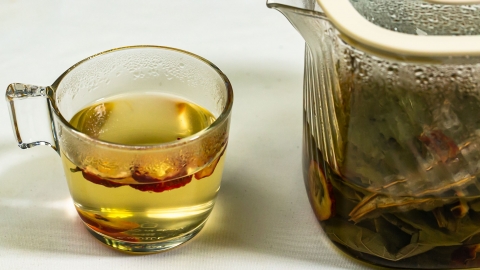
3. Tangerine Peel Tea: Dried tangerine peel (Chenpi) is warm in nature and pungent in taste. It helps regulate qi, strengthen the spleen, dry dampness, and resolve phlegm. It can alleviate internal phlegm-dampness caused by stagnation of spleen-stomach qi, reducing excessive and sticky phlegm as well as dry mouth. It is best suited for individuals with a warmer constitution.
4. Mint Tea: Mint is cool and pungent, effective in dispersing wind-heat, clearing the head and eyes, and soothing the throat. It can relieve dry mouth and sore throat due to external wind-heat, help thin phlegm, and provide a refreshing, comfortable sensation.
5. Solomon's Seal (Yuzhu) Tea: Yuzhu is slightly cold and sweet in taste, known for nourishing yin, moistening dryness, promoting fluid production, and relieving thirst. It is suitable for dry mouth and throat caused by yin deficiency and can help improve chronic cough with little phlegm. It is gentle and non-irritating to the gastrointestinal tract.
When consuming these teas, avoid excessive strength to prevent irritation of mucous membranes. Drink them warm rather than chilled. Combine with a light diet, minimizing spicy and greasy foods, ensure adequate water intake, and maintain regular作息 (daily routines) to support recovery.


