


What Chinese herbs can tonify both kidney yang deficiency and kidney yin deficiency?

Yin and yang of the kidney are the foundation of yin and yang in the human body. Kidney yin deficiency is often accompanied by tidal fever, night sweats, dry mouth, and sore throat, while kidney yang deficiency commonly manifests as aversion to cold, cold limbs, and soreness and weakness in the lower back and knees. Some Chinese herbs can regulate both conditions. Patients may use traditional Chinese medicines such as Rehmannia glutinosa tablets, Cornus officinalis flesh, Lycium barbarum granules, Cuscuta seed slices, and Polygonum multiflorum tablets under medical guidance. The specific analysis is as follows:
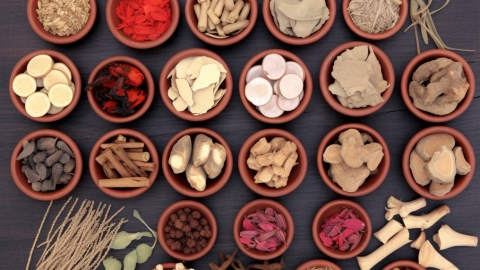
1. Rehmannia Glutinosa Tablets
Rehmannia glutinosa is sweet and warm in nature with a moist quality, entering the liver and kidney meridians. It excels at nourishing kidney yin, improving dizziness, tinnitus, and soreness and weakness in the lower back and knees caused by kidney yin deficiency. It also tonifies kidney essence and mildly strengthens kidney yang, making it an essential herb for replenishing both yin and yang. It is commonly used as a base herb for syndromes involving deficiency of both kidney yin and yang.
2. Cornus Officinalis Flesh
Cornus officinalis has a sour taste and slightly warm nature, entering the liver and kidney meridians. It not only consolidates and astringes but also tonifies the liver and kidneys. When used to nourish yin, it helps enhance kidney yin and suppress internal heat due to deficiency fire; when used to tonify yang, it supports kidney yang and secures essence and qi. It is effective in regulating soreness and weakness in the lower back and knees, dizziness, and vertigo caused by deficiency of both kidney yin and yang.
3. Lycium Barbarum Granules
Lycium barbarum is sweet in taste and neutral in nature, entering the liver and kidney meridians. With its mild medicinal property, it nourishes without causing stagnation. It nourishes kidney yin to relieve symptoms such as deficiency-related fatigue, depletion of essence, dry mouth, and sore throat due to yin deficiency, while also mildly reinforcing kidney yang to improve soreness and weakness in the lower back and knees caused by insufficient kidney yang. It is suitable for long-term regulation.
4. Cuscuta Seed Slices
Cuscuta seed is sweet and warm in nature, entering the liver, kidney, and spleen meridians. It benefits the kidneys, enriches essence, and has astringent properties that help control urination. In tonifying yang, it warms the kidneys and enhances yang, alleviating aversion to cold and cold limbs; in nourishing yin, it滋nourishes kidney yin and aids in filling essence and nourishing marrow. It is suitable for treating seminal emission and frequent urination caused by deficiency of both kidney yin and yang.
5. Polygonum Multiflorum Tablets
Processed Polygonum multiflorum is sweet and astringent in taste, slightly warm in nature, entering the liver and kidney meridians. It effectively tonifies the liver and kidneys, enriches essence and blood, nourishes kidney yin, and also gently warms and strengthens kidney yang, improving kidney yang insufficiency. It shows good regulatory effects on dizziness, vertigo, and soreness and weakness in the lower back and knees caused by deficiency of both kidney yin and yang.
In daily life, one should maintain regular作息 (daily routines), avoid staying up late and overexertion, incorporate appropriate foods such as Chinese yam and walnuts into the diet, and avoid raw, cold, spicy, and stimulating foods to support the recovery of kidney yin and yang.


