How to Treat Tetracycline-Stained Teeth
Aug 10, 2026
Source: Cainiu Health

Dr. Liu Chao
Introduction
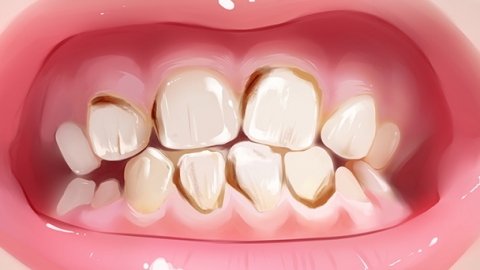
Tetracycline-stained teeth can be treated through various methods, including routine dental cleaning and care, tooth whitening and restoration, porcelain veneers, porcelain-fused-to-metal crowns, and laser whitening therapy. The appropriate treatment is selected based on the severity of tooth discoloration to effectively improve tooth color and restore aesthetic appearance. For severe tetracycline staining accompanied by structural defects, prompt medical evaluation and treatment are essential. In cases of mild tetracycline staining, regular ultrasonic scaling is recommended.
Tetracycline-stained teeth can be treated through various methods—including routine dental cleaning and maintenance, tooth whitening and restoration, porcelain veneers, porcelain-fused-to-metal (PFM) crowns, and laser whitening—tailored to the severity of discoloration to restore natural tooth color and aesthetic appearance. Patients with severe discoloration accompanied by structural defects should seek prompt professional dental evaluation and treatment.
1. Routine Dental Cleaning and Maintenance: Suitable for mild tetracycline staining, this approach involves regular ultrasonic scaling to remove surface stains, dental calculus, and plaque, thereby lightening superficial discoloration. This method addresses only extrinsic stains, enhancing overall tooth brightness and maintaining baseline oral hygiene.
2. Professional Tooth Whitening and Restoration: Indicated for moderate, uniform tetracycline staining, this technique employs cold-light whitening to oxidize intrinsic pigments within the dentin, gently brightening tooth color. It causes minimal enamel damage and effectively improves yellowish or grayish discoloration.
3. Laser Whitening Treatment: Utilizes laser energy to activate whitening agents, enabling deep penetration and targeted breakdown of deeply embedded pigment deposits. Particularly effective for severe tetracycline staining, this method delivers more stable and long-lasting results, significantly enhancing overall dental aesthetics.
4. Porcelain Veneers: Recommended for teeth with heavy pigmentation and minor structural defects, ultra-thin porcelain veneers are bonded to the tooth surface to mask underlying discoloration. Offering natural translucency and lifelike color, veneers simultaneously correct tooth shape and unify tooth shade—making them suitable for most cases of tetracycline staining.
5. Porcelain-Fused-to-Metal (PFM) Crowns: Typically used for severely discolored teeth with extensive structural damage, PFM crowns fully encase the affected tooth, completely concealing deep-seated pigment. They provide excellent mechanical strength and comprehensively restore both aesthetics and normal masticatory function.
To sustain long-term dental whiteness and aesthetics, maintain consistent twice-daily brushing, limit frequent consumption of dark-colored foods and highly pigmented beverages, and schedule regular dental check-ups and preventive care.