


What Are the Criteria for Successful Dental Implants?

Successful dental implantation can be evaluated based on multiple criteria, including osseointegration status, absence of pain or discomfort, normal occlusal function, stable gingival condition, and absence of implant mobility—providing a comprehensive assessment of the actual clinical outcome. Should swelling, pain, or abnormal occlusion occur post-implantation, prompt medical consultation and follow-up examination are essential.
1. Osseointegration Status: The implant achieves firm osseointegration with the alveolar bone, with no evident peri-implant bone resorption. Radiographic imaging reveals no radiolucent areas around the implant. This forms the fundamental prerequisite for long-term stability and functional endurance, enabling the implant to withstand routine masticatory forces.
2. Absence of Pain or Discomfort: Following prosthetic restoration, the implant site exhibits no spontaneous pain or tenderness upon palpation, nor does chewing elicit significant discomfort. There is no persistent dull ache, numbness, or tingling in the oral or maxillofacial region, and no recurrent atypical symptoms—resulting in overall comfort during daily use.
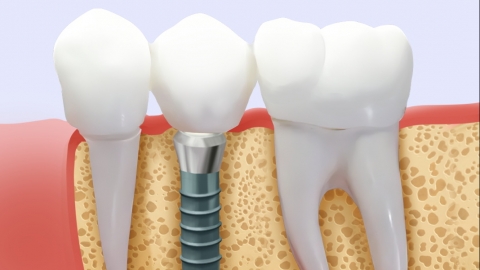
3. Normal Occlusal Function: The implant-supported prosthesis accommodates standard masticatory forces, allowing efficient chewing of common foods with harmonious occlusal contact. There are no premature occlusal contacts (“high spots”), nor does the implant interfere with adjacent teeth’s load distribution—restoring masticatory function closely resembling that of natural dentition.
4. Stable Gingival Condition: Peri-implant gingiva displays healthy coloration, without recurrent erythema, edema, suppuration, or bleeding. The gingival margin fits snugly against the implant abutment. Persistent inflammatory responses are absent, thereby maintaining an effective soft-tissue biological barrier.
5. Absence of Implant Mobility: Both the implant fixture and its superstructure (e.g., crown) remain securely fixed, with no detectable mobility or displacement. No abnormal movement occurs during speech or mastication, ensuring long-term stability and preventing mechanical loosening or detachment of components.
Routine maintenance—including meticulous cleaning around the implant site using dental floss and oral irrigators to minimize plaque accumulation, avoiding excessively hard foods, and attending regular follow-up examinations—significantly extends the functional lifespan of dental implants.


