


What Causes Acne on the Right Cheek?

Acne on the right cheek may result from inadequate facial cleansing, irregular sleep and dietary habits, common acne (acne vulgaris), folliculitis, or seborrheic dermatitis. Improvement can be achieved through proper facial cleansing, lifestyle adjustments, and targeted medication. However, if acne recurs with inflammation or erupts extensively, prompt medical consultation is advised.
1. Inadequate facial cleansing: Residual skincare products, dust, and sebum on the right cheek can clog surface pores. Accumulation of metabolic waste within pores may gradually lead to comedones and inflammatory acne. It is recommended to gently cleanse the face twice daily—morning and evening—with particular attention to the cheek area, to effectively remove excess oil and impurities.
2. Irregular sleep and dietary habits: Chronic sleep deprivation and frequent consumption of high-sugar, high-fat foods can impair normal skin metabolism. Excessive sebaceous gland activity may thereby trigger recurrent acne on the right cheek. Adopting regular sleep patterns and a light, balanced diet—while limiting intake of sweets and fried foods—is advisable.
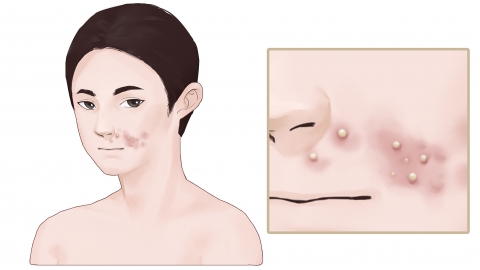
3. Acne vulgaris: Overactive sebaceous glands combined with abnormal keratinization and obstruction of the pilosebaceous ducts provoke localized inflammatory reactions. This manifests on the right cheek as comedones, papules, or pustules, often recurring. Under medical supervision, topical treatments such as adapalene gel or clindamycin gel, along with oral vitamin B6 tablets, may be prescribed to alleviate symptoms.
4. Facial folliculitis: Bacterial invasion of facial hair follicles triggers localized follicular inflammation and congestion. Clinically, this presents as erythematous, tender papulopustules; pressure exacerbates discomfort. Under physician guidance, topical mupirocin ointment or fusidic acid cream, and oral roxithromycin dispersible tablets may be used to relieve symptoms.
5. Seborrheic dermatitis: Abnormal overproduction of sebum in the cheek area disrupts cutaneous microbial balance, leading to superficial inflammation. Affected areas exhibit excessive oiliness and inflammatory acne, often accompanied by mild facial erythema and scaling. Treatment under medical supervision may include topical ketoconazole cream or tacrolimus ointment, and oral vitamin B complex tablets.
In daily life, maintain facial cleanliness and freshness; avoid touching or squeezing acne on the cheeks; adhere to regular sleep schedules; follow a light, nutritious diet; use gentle skincare products; and support stable epidermal turnover and skin homeostasis.


